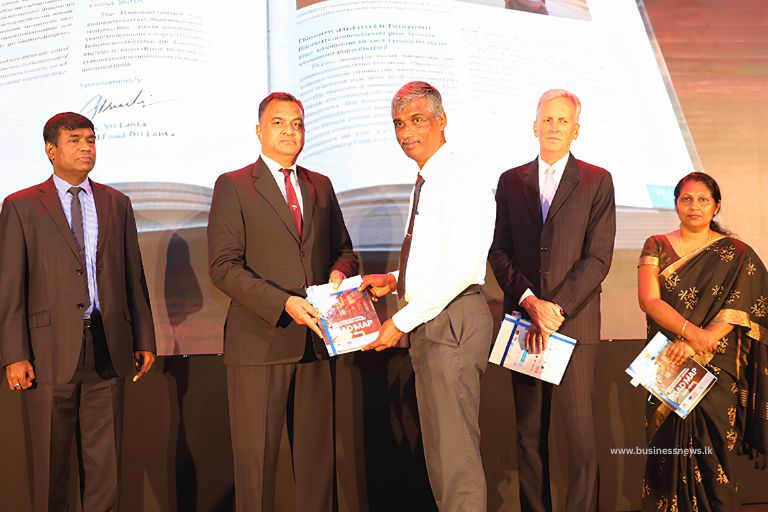
Authorities on Thursday, 04th June, introduced a new five-year roadmap aimed at improving disaster preparedness through better forecasting, earlier warnings, and faster support for vulnerable communities before disasters strike at the Cinnamon Grand, Colombo.
The Disaster Management Centre (DMC), with technical leadership from the United Nations World Food Programme (WFP) and funding from the Government of the United States, unveiled the Anticipatory Action (AA) Roadmap for 2026–2030.
According to the WFP, the roadmap focuses on strengthening preparedness measures by advancing impact-based forecasting, improving early warning systems, and expanding forecast-based financing mechanisms.
The approach is designed to help authorities act before disasters occur rather than responding only after damage has already been caused.
Focus on Early Action
Officials say the roadmap promotes a coordinated system that can identify potential threats earlier and trigger timely interventions to reduce risks faced by communities.
The framework is expected to support faster decision-making during emergencies and improve the ability of agencies to protect people, livelihoods, and critical infrastructure from weather-related disasters and other hazards.
The WFP said the initiative outlines a common approach for anticipatory action across key sectors and aims to strengthen collaboration among government institutions, humanitarian organisations, and development partners.
Coordinated National Effort
The roadmap was developed through the National Anticipatory Action Working Group, which brings together the DMC, WFP, UN agencies, international and national non-governmental organisations, civil society groups, and private sector partners.
According to the statement, the programme is intended to improve preparedness, reduce disaster risks, and ensure support reaches vulnerable communities before emergencies escalate.
Disaster management experts increasingly view anticipatory action as a cost-effective approach because it helps reduce losses, protects livelihoods and limits the social and economic impact of disasters through early intervention.
The roadmap will guide preparedness and response efforts between 2026 and 2030 as authorities work to build stronger resilience against future disasters.
Leadership Calls for ‘Early Warning, Early Action’
The launch event was attended by Defence Secretary Air Vice Marshal Sampath Thuyacontha (Retd), who served as the Chief Guest.
During the ceremony, the first copy of the Anticipatory Action Roadmap was formally handed over to the Defence Secretary by Chathura Liyanarachchige, Director of Preparedness and Planning at the Disaster Management Centre.
Delivering the keynote address, the Defence Secretary stressed the importance of embedding the principle of “Early Warning, Early Action” into disaster management systems.
Drawing on lessons from recent extreme weather events, he said authorities must make greater use of scientific forecasting and risk assessments to take preventive action before disasters occur.
According to Thuyacontha, acting on early warnings can help authorities deploy resources in advance, protect vulnerable communities, and reduce the impact of disasters on lives, livelihoods, and critical infrastructure.
He noted that strengthening preparedness remains one of the most effective ways to minimise disaster-related losses and improve resilience against future emergencies.

Last modified: June 5, 2026