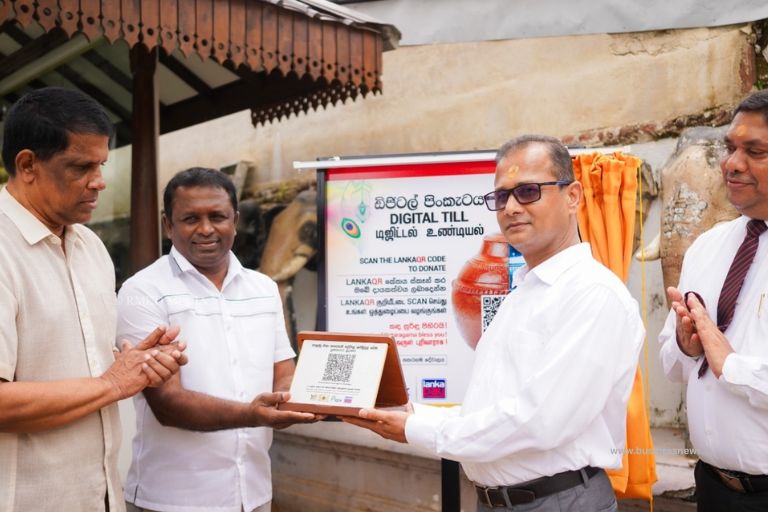
The growing adoption of digital payments is now extending beyond retail transactions and public services into religious institutions, with Bank of Ceylon introducing QR-based digital donation facilities at two of the country’s most visited sacred sites.
Bringing Digital Payments to Religious Giving
The initiative reflects a broader effort to expand the use of cashless payment systems across different aspects of daily life.
Under the new system, devotees visiting the sacred sites can make donations using QR-based payment platforms, providing an alternative to traditional cash offerings.
The project aligns with ongoing efforts by the Government and the Central Bank to promote digital payments and increase the adoption of cashless transaction methods across the country.
Expanding the Digital Economy
Financial institutions have been increasingly promoting QR-based payment systems as part of the country’s digital transformation agenda.
While digital payments have become common in supermarkets, retail outlets, restaurants, and transport services, their introduction to religious institutions represents another step in expanding digital financial services into community and cultural spaces.
Bank of Ceylon said the initiative is aimed at providing devotees with a secure and convenient method of making donations while supporting wider efforts to encourage digital payment adoption.
The installations were carried out with the support of the Kiri Vehera Raja Maha Viharaya and the Ruhunu Maha Kataragama Devalaya administration.
The development highlights how digital payment infrastructure is gradually becoming part of a wider range of everyday activities, including charitable and religious contributions, as the country continues its transition towards a more digitally connected economy.
Banking & Finance Digital Economy Product Launches
Last modified: June 9, 2026