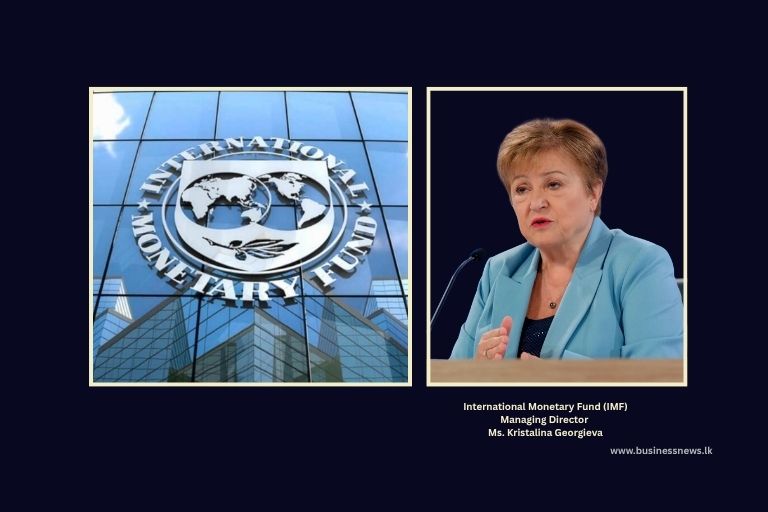
The world can no longer treat economic and geopolitical disruptions as temporary events, according to International Monetary Fund (IMF) Managing Director Ms. Kristalina Georgieva, who has warned that governments and institutions must adapt to a future where major shocks occur more frequently.
Speaking on Bloomberg’s Leaders with Francine Lacqua podcast, Georgieva said policymakers need to build stronger economic foundations capable of withstanding repeated disruptions rather than expecting a return to long periods of stability.
“I am worried that we are not completely internalizing yet that this is how the world is going to be,” Georgieva said. “We are not going to get to a place where shocks are gone.”
Why Economic Resilience Matters
Since taking over as IMF Managing Director in 2019, Georgieva has overseen the institution during a period marked by multiple global disruptions, including the COVID-19 pandemic, geopolitical conflicts, trade tensions, and rising uncertainty across financial markets.
Her comments reflect a growing concern among international policymakers that governments must focus not only on growth, but also on resilience.
The IMF currently has lending capacity of nearly US$1 trillion and works with 191 member countries to support economic stability, policy reforms, and crisis response efforts.
According to Georgieva, objective economic analysis remains one of the institution’s most important tools in helping countries navigate an increasingly uncertain global environment.
AI Presents the Next Major Challenge
Beyond current economic pressures, Georgieva identified artificial intelligence as one of the most important structural changes facing economies worldwide.
She acknowledged that policymakers and international institutions underestimated some of the social consequences created by globalization, particularly the impact on communities that lost jobs as industries shifted across borders.
“We collectively, including the fund, did not appreciate the backlash against globalization,” she said.
Georgieva stressed that lessons from globalization should be applied to the rapid expansion of artificial intelligence to avoid widening inequalities and labour market disruptions.
“I’ll tell you what I’m very keen not to see repeated is the same with artificial intelligence,” she added.
Global Outlook Under Review
The IMF is expected to release an updated global economic outlook in July after revising down its growth forecasts earlier this year amid rising geopolitical and economic uncertainties.
The institution continues to monitor economic conditions across member countries while providing policy advice, financing support, and economic assessments through its regular surveillance programmes.
Georgieva’s comments underline a broader message increasingly emerging from international financial institutions: future economic success may depend not only on growth, but also on how effectively countries prepare for a world where uncertainty has become a permanent feature of the global economy.
International Monetary Fund (IMF)
Last modified: June 9, 2026