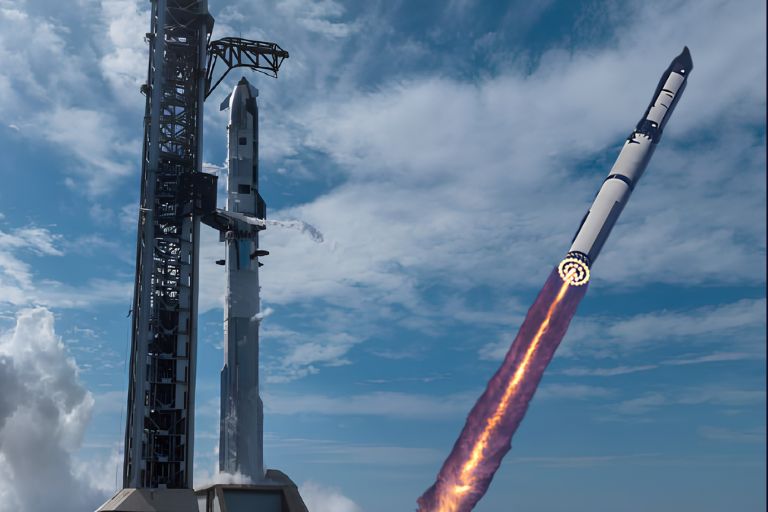
SpaceX has successfully completed its first Starship test flight since becoming a publicly listed company, marking an important step towards expanding its Starlink satellite internet network.
The test flight saw Starship deploy 20 Starlink satellites into suborbital space before completing a controlled splashdown in the Indian Ocean. The successful mission marked the rocket’s 13th test flight and followed several previous tests that ended in explosions, mid-air breakups or failed splashdowns.
SpaceX founder Elon Musk confirmed the outcome on X, stating that Starship remained intact after landing in the ocean and continued transmitting flight data.
Supporting Starlink Expansion
The hour-long mission will provide engineers with critical flight data as SpaceX prepares to expand its Starlink satellite constellation using the next-generation Starship rocket.
The 20 test satellites briefly connected to SpaceX’s Starlink network before re-entering Earth’s atmosphere and burning up as planned.
SpaceX plans to use Starship to deploy its larger V3 Starlink satellites by the end of 2026. The upgraded satellites are expected to improve internet coverage and network capacity, particularly in remote areas where traditional mobile and broadband services remain limited.
The successful test marks another milestone in the development of Starship, the world’s most powerful rocket. It also strengthens SpaceX’s efforts to build a fully reusable launch system capable of carrying larger payloads into space at lower costs.
For SpaceX, the mission represents progress towards expanding commercial satellite services while advancing the long-term development of Starship for future space missions.
Last modified: July 26, 2026