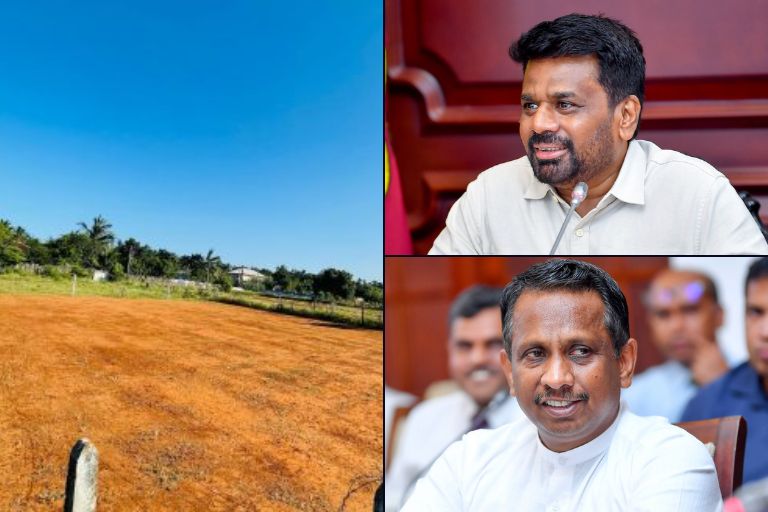
Thousands of Sri Lankan migrant workers return home after completing overseas employment. Many struggle to rebuild their livelihoods and secure a steady income. To address this challenge, the Government plans to allocate underutilised land and provide project support services to help them start productive ventures.
President Anura Kumara Dissanayake directed the relevant authorities to prepare the programme during a review of projects under the Ministry of Plantation and Community Infrastructure and discussions on proposals for the 2027 Budget, according to the President’s Media Division (PMD).
The proposed programme aims to help returning migrant workers generate sustainable incomes while bringing underutilised State land into productive use. The PMD did not provide details on how the programme will operate or when it will begin.
Plantation Projects Under Review
The meeting reviewed the progress of development projects in the plantation and community infrastructure sectors. Officials also discussed priorities, funding requirements and planned initiatives for the 2027 Budget.
The review covered several plantation programmes funded under the 2026 Budget. These included estate land surveys, coconut disease management, the Kapruka Fund, coconut production initiatives and the Northern Coconut Triangle Programme.
President Dissanayake also reviewed plantation infrastructure projects. He instructed officials to complete the programme to build 10,000 houses for the Malayagam community on schedule and hand them over to beneficiaries without delay.
Improving Project Delivery
The President said weaknesses in implementing projects funded through foreign grants and loans had left some allocated funds unused or forced authorities to return them. He called for stronger implementation mechanisms to improve the use of available funding.
Officials also reviewed the relief programme supporting the replanting of tea, coconut and rubber crops damaged by the Ditwah disaster.
The PMD said the tea, coconut, rubber, cashew and palmyrah sectors have recorded better growth and higher profitability this year than last year. Six State plantation companies have also improved their financial performance.
Tea, Rubber and Coconut Programmes
Officials reported that smallholders manage about 60,000 hectares of tea cultivation across the country. Of the Rs. 450.06 million allocated in the 2026 Budget for replanting smallholder tea plantations, authorities have already used Rs. 155.07 million.
President Dissanayake instructed officials to speed up the 500 Tea Villages Programme by linking it with grassroots initiatives such as Prajashakthi.
The meeting also reviewed rubber replanting, research programmes and the Rs. 137 million allocated to the Rubber Research Institute. Officials also discussed coconut industry development, productivity improvements, value-added products and research activities.
Cashew Production and State Land
According to the PMD, Sri Lanka expects to produce 18,000 metric tonnes of cashew this year against an annual requirement of 25,000 metric tonnes. Officials also discussed plans to expand cashew cultivation across about 15,000 hectares in the Northern and Eastern Provinces.
The meeting reviewed progress in consolidating plantation sector institutions and implementing Cabinet decisions on non-commercial State institutions.
President Dissanayake also called for a review of agreements signed by previous governments when allocating State land to companies. He instructed the Ministry of Finance to appoint a committee to examine the agreements and recommend stronger arrangements for future State land allocations.
The President also asked officials to explore offering courses conducted by the National Institute of Plantation Management through universities in consultation with the relevant higher education institutions.
Developments Investment Presidential Affairs
Last modified: July 26, 2026