Nearly 500,000 families in Colombo and Kalutara districts are expected to benefit from the Kalu Ganga Water Project, which is estimated to cost Rs.73 billion.
The project will add new water treatment, storage, and pipeline facilities. These facilities will help expand the supply of drinking water in the two districts.
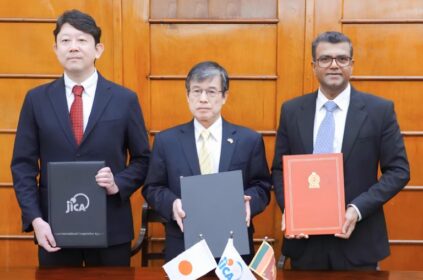
The Japan International Cooperation Agency (JICA) will provide loan assistance for the project.
New plant to treat 140,000 cubic metres a day
The Kalu Ganga Water Project includes a new water purification plant. The plant will treat up to 140,000 cubic metres of water a day.
The project will also include water storage towers and a large pipeline network.
These facilities will increase the capacity of the water supply system in parts of Colombo and Kalutara.
For families, the main benefit will be better access to treated drinking water as demand grows.
Government wants to avoid delays
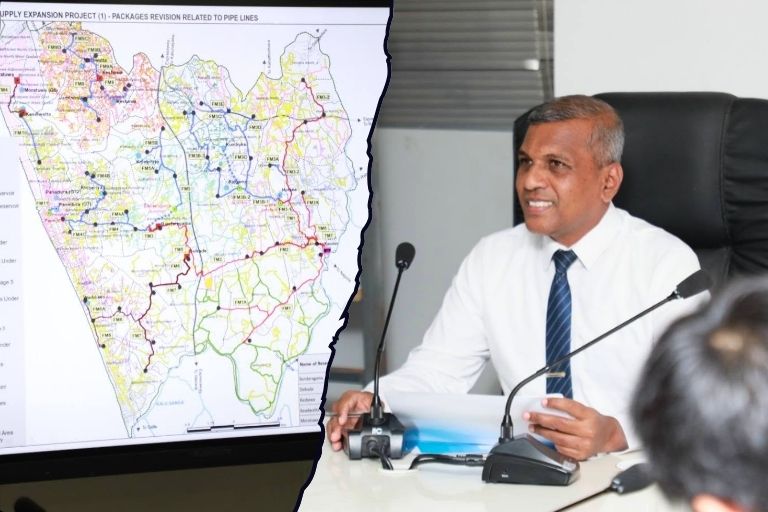
Housing, Construction and Water Supply Minister Susil Ranasinghe held a discussion on the project with Honzu Shigeo, Chief Representative of JICA in Sri Lanka.
JICA officials, the ministry secretary, the project director and senior officials from the National Water Supply and Drainage Board also took part in the discussion.
The meeting focused on the progress of the project and the need to complete the work without delays.
Officials also discussed the need for close coordination between the agencies involved.
The government wants to complete the project on time. This would allow the new water facilities to serve families sooner.
Adding capacity to the water network
The Kalu Ganga project will add new water infrastructure in the Western Province.
The new treatment plant will increase water treatment capacity. The storage towers will hold treated water, while the pipelines will carry it through the supply network.
The project could also help meet the growing demand for drinking water in Colombo and Kalutara. Both districts have seen continued growth in residential areas and urban activity.
The next stage involves moving ahead with the project and building its main facilities.
For the nearly 500,000 families covered by the project, the key issue will be how quickly the new treatment plant, storage towers and pipelines become part of the water supply system.


Last modified: September 15, 2026