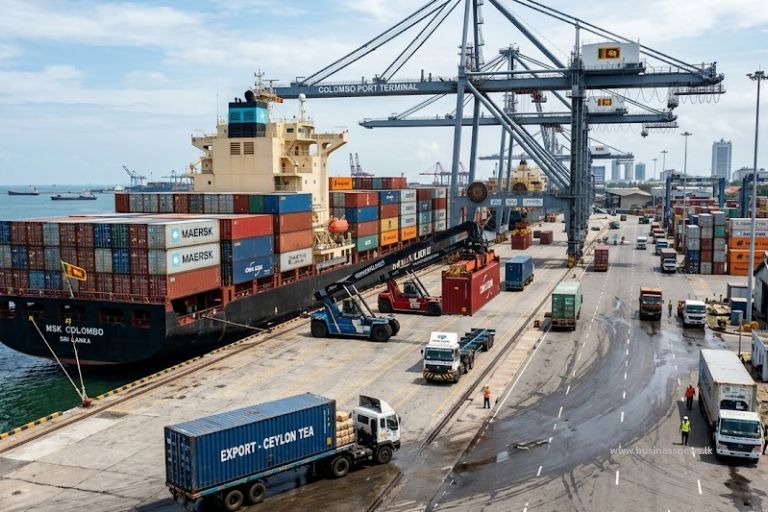
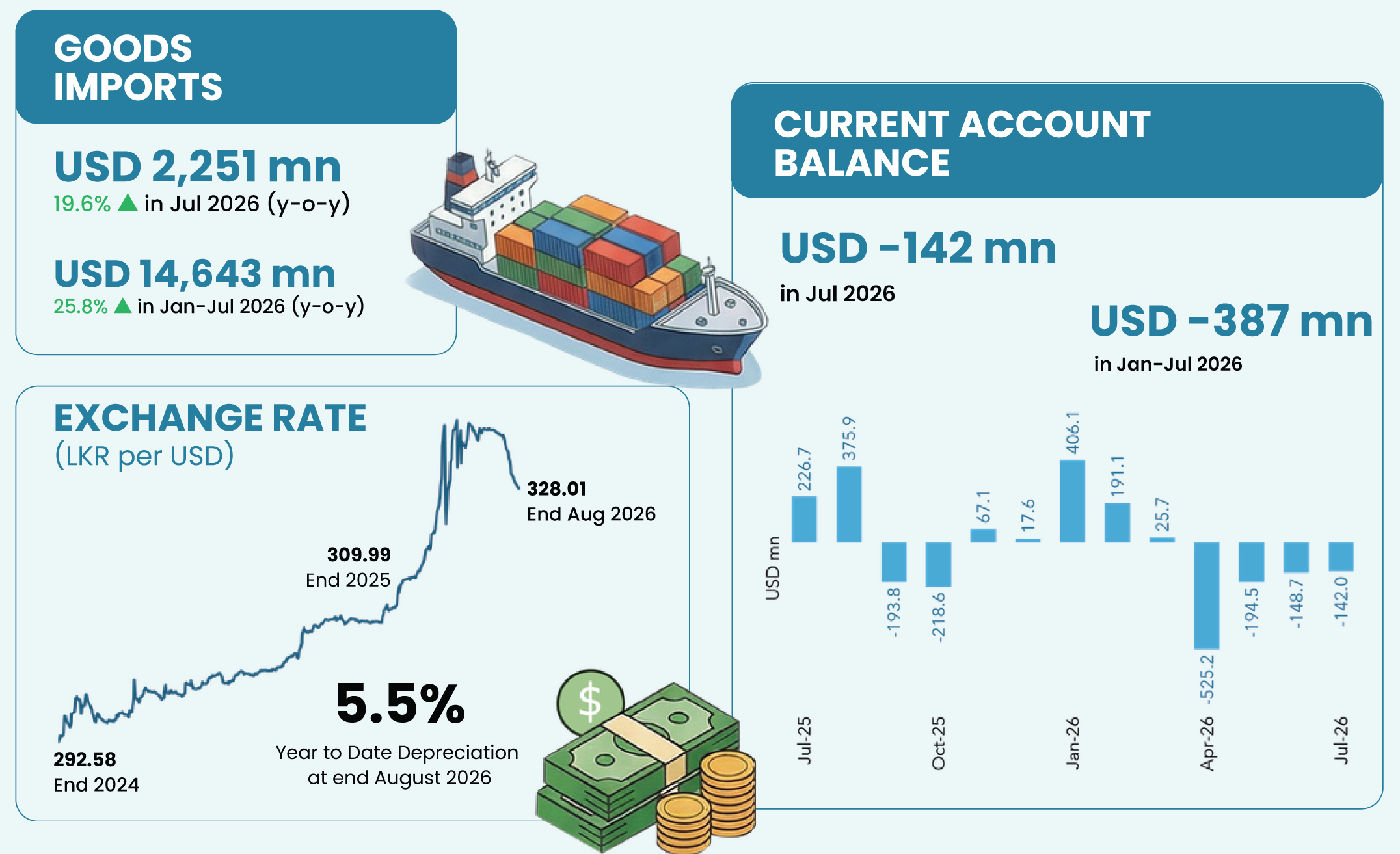
Sri Lanka’s external account came under further pressure in July 2026, as higher import spending pushed the monthly current account deficit to US$142 million.
This was the fourth consecutive month in which the external current account recorded a deficit.
For the first seven months of 2026, the deficit reached US$387 million. The same period last year recorded a surplus.
The main pressure came from the widening gap between exports and imports.
The merchandise trade deficit rose to US$6.5 billion between January and July, up sharply from US$3.9 billion a year earlier.
Fuel and vehicle imports drive the trade gap
Fuel has become one of the largest pressures on the import bill.
Sri Lanka spent around US$453 million on fuel imports in July, slightly below the US$465 million spent in June.
However, July’s fuel import bill was still 68% higher than a year earlier.
For the first seven months, fuel imports cost about US$3.62 billion, up 59.9% from the same period in 2025.
Vehicle imports have also added to the bill.
The country spent US$241 million on motor vehicles in July. That brought total vehicle import spending to US$1.495 billion from January to July.
As import costs rose faster than export prices, the terms of trade also deteriorated in July.
Tourism weakens while remittances rise
The services sector continued to provide support, but its contribution has weakened from a year earlier.
The services account recorded a US$244 million surplus in July, down 23% from July 2025. However, the surplus increased 50.7% from June as tourism earnings recovered during the month.
Tourist arrivals reached 1.34 million during January to July, compared with 1.37 million during the same period last year.
Tourism earnings fell 11.5% year on year to around US$1.8 billion during the first seven months.
Workers’ remittances provided a stronger source of foreign exchange.
Remittances rose 11.5% to US$778 million in July, taking the seven-month total to US$5.4 billion. That was a 21.4% increase from the same period last year.
Reserves provide some cushion
Gross official reserves stood at US$6.6 billion at the end of July, including the currency swap facility with the People’s Bank of China.
The Central Bank has also continued buying foreign exchange, helping support the reserve position.
Foreign investors also put US$159.4 million into government securities in July. The Colombo Stock Exchange, however, recorded a net foreign outflow of US$6.3 million across its primary and secondary markets.
The rupee remained under pressure, depreciating 5.5% against the US dollar during the first eight months of 2026.
Recent weeks have shown some improvement in the currency, according to the latest data.
The external sector therefore presents a mixed picture. Fuel and vehicle imports are widening the trade gap, while remittances and official reserves are providing a cushion.
The key issue in the months ahead will be whether foreign exchange earnings can keep pace with the cost of imports.
Source: Central Bank of Sri Lanka
Import and Export Numbers & Indexes
Last modified: September 1, 2026