NASA has launched a $4 billion space telescope that could survey the entire Milky Way in just one month.
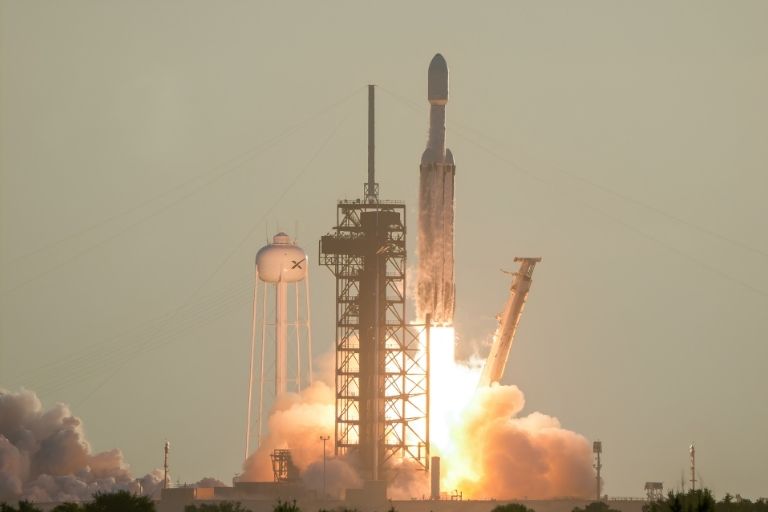
The Nancy Grace Roman Space Telescope lifted off from NASA’s Kennedy Space Center in Florida on Sunday aboard a SpaceX Falcon Heavy rocket.
The telescope will study some of the biggest questions in astronomy, including dark matter, dark energy and planets beyond our solar system.
What makes Roman different?
Roman can see a much wider area of space than the Hubble Space Telescope.
NASA scientists say one month of Roman observations could cover the entire Milky Way.
The same survey would take Hubble about 100 years.
That difference comes from Roman’s wide field of view.
Scientists compare Roman to a camera with a wide-angle lens. The James Webb Space Telescope, by comparison, works more like a zoom lens.
Webb can look deeply into small areas of space. Roman will scan much larger areas much faster.
Two billion galaxies on the map
Roman’s main survey is expected to cover more than two billion galaxies.
The telescope will use those observations to create one of the most detailed three-dimensional maps of the universe.
Scientists hope the data will help them understand dark matter and dark energy.
Dark matter does not give off light, but scientists can see its effects through gravity. Dark energy is the name given to the unknown force linked to the accelerating expansion of the universe.
Roman will also search for exoplanets, or planets outside our solar system.
NASA expects the telescope to discover thousands of new exoplanets. It could also help scientists understand how common planetary systems like ours are.
A five-year mission begins
Roman will travel about 1.6 million kilometres from Earth to an area of space known as Lagrange Point 2.
NASA has planned the mission for five years. The telescope may have enough fuel to continue for another five years.
The mission will also build on discoveries made by Hubble and James Webb.
For NASA, the launch comes after years of funding battles. The Trump administration sought to reduce or remove funding for Roman during both of Donald Trump’s terms, but Congress continued to fund the project.
NASA said the telescope launched nine months ahead of schedule.
Now, the focus shifts from building the telescope to what it may discover.
Scientists could spend years studying Roman’s data, including evidence that may change what we know about the universe, its planets and the forces shaping its future.
More:
Over 4,000 BYD Customers Install New Mobile App In Sri Lanka
Last modified: August 31, 2026