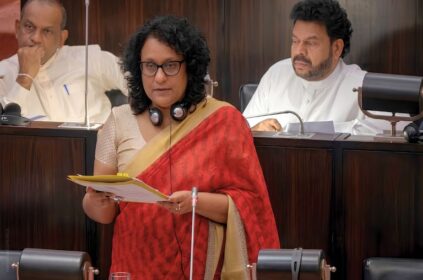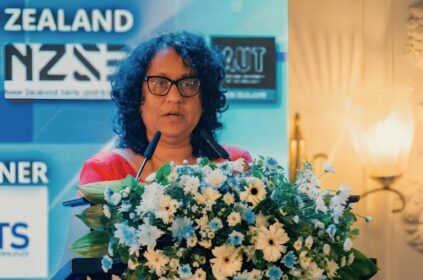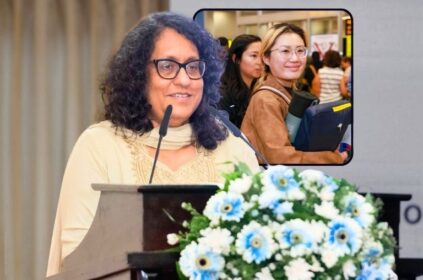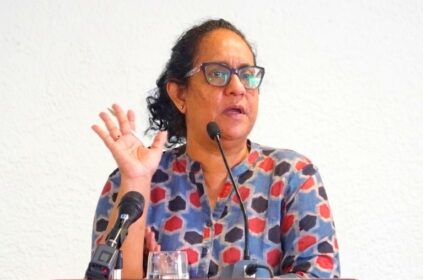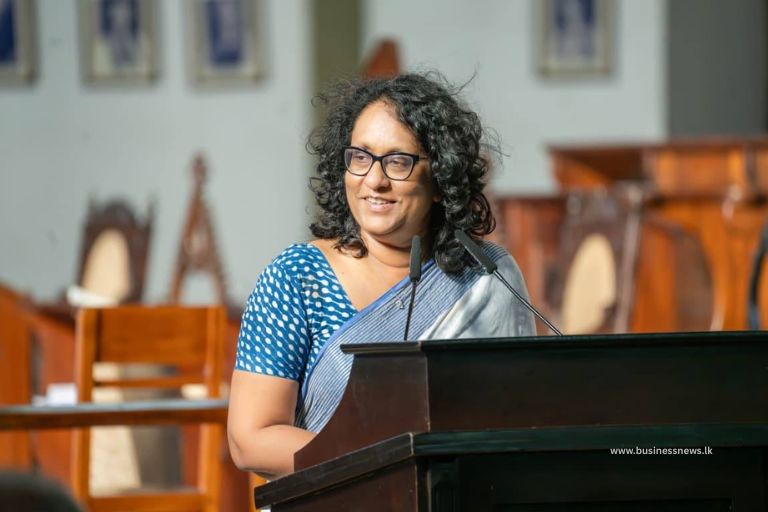
Prime Minister Dr. Harini Amarasuriya has outlined a broader vision for education reform, arguing that the country’s education system should focus not only on producing workers for the economy but also on developing informed, responsible, and critically engaged citizens.
Delivering the Bishop Cyril Abeynayake Memorial Lecture under the theme “Shaping the Future of Education in 21st Century Sri Lanka and Beyond,” the Prime Minister questioned whether decades of education reforms have successfully addressed the deeper challenges facing the sector.
Referring to the 1971 ILO Seers Report, she noted that policymakers have long attempted to address issues such as skills mismatches and graduate unemployment through reforms focused on STEM education, technical training, and employability skills. However, she argued that these approaches have not fully resolved the structural problems within the education system.
According to the Prime Minister, the original vision behind the free education reforms introduced by Dr. C.W.W. Kannangara was not simply to prepare individuals for employment. Instead, it was intended to create citizens capable of contributing to a democratic society through critical thinking, social responsibility, and civic participation.
Her remarks suggest a shift in the debate around education policy. For decades, discussions have largely centred on employability, labour market requirements, and economic productivity. While acknowledging the importance of these objectives, the Prime Minister argued that education should also serve a broader social purpose.
She identified several challenges that continue to affect the sector. These include inequalities between elite and non-elite schools, concerns about the ability of the system to nurture analytical and socially conscious citizens, the gap between women’s educational achievements and labour force participation, and the growing impact of technological change, particularly artificial intelligence.
The Prime Minister also warned against reducing education to a process focused solely on examinations and qualifications. She argued that education should be viewed as a transformative experience that equips individuals to understand society, adapt to change, and contribute meaningfully to national development.
On artificial intelligence, she stressed that the challenge extends beyond updating syllabuses. According to her, preparing for AI will require improvements in digital literacy, online safety, institutional capacity, and the broader learning environment.
The Prime Minister further argued that meaningful reform cannot be achieved through curriculum changes alone. Instead, it requires changes to the wider education ecosystem, including how students learn, how parents engage with schools, and how society views the teaching profession.
Her comments come as policymakers worldwide grapple with similar questions about the future of education. As technology reshapes economies and labour markets, governments are increasingly being challenged to balance workforce preparation with the broader goal of developing citizens capable of navigating complex social and democratic environments.
The speech signals that future education reforms may place greater emphasis on addressing structural inequalities, adapting to technological change, and redefining the purpose of education beyond employment outcomes alone.

Last modified: June 3, 2026