When a traditional craft disappears, the loss goes far beyond a product or a familiar design.
Centuries of knowledge can disappear with it. So can the livelihoods and relationships that support the craft, from farmers and spinners to dyers, weavers and toolmakers.
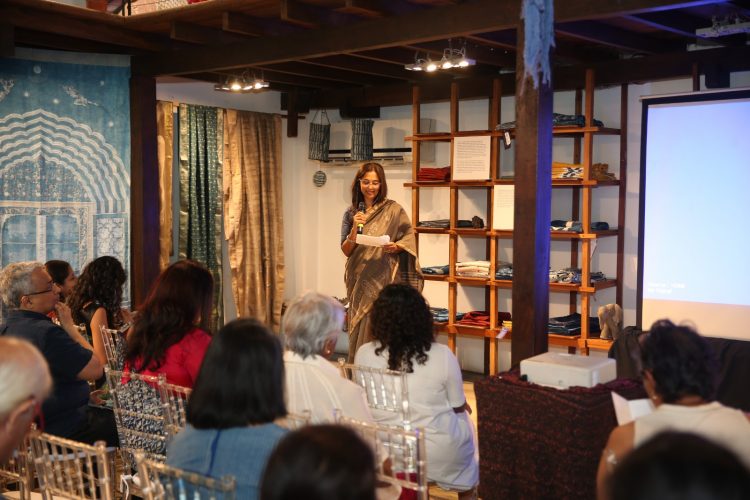
That question took centre stage at a recent knowledge-sharing session hosted by Rithihi in Colombo, where craft revivalists, designers and makers explored what it takes to bring near-extinct crafts back to life.
The session marked the fourth edition of Rithihi’s Textile Tales series. It brought Rajasthan-based revivalist designer Alka Sharma to Colombo and included a documentary screening on India’s indigo dye-making communities.
A craft needs to evolve to stay alive
For Sharma, preserving a craft does not mean keeping it frozen in the past.
She told the gathering that preservation and innovation must work together. A craft can lose its place in everyday life if it stops evolving. However, innovation without a deep understanding of the craft can also weaken the knowledge that makes it unique.
Sharma said designers have a role to play by listening to artisans and creating the conditions for traditional knowledge to remain relevant.
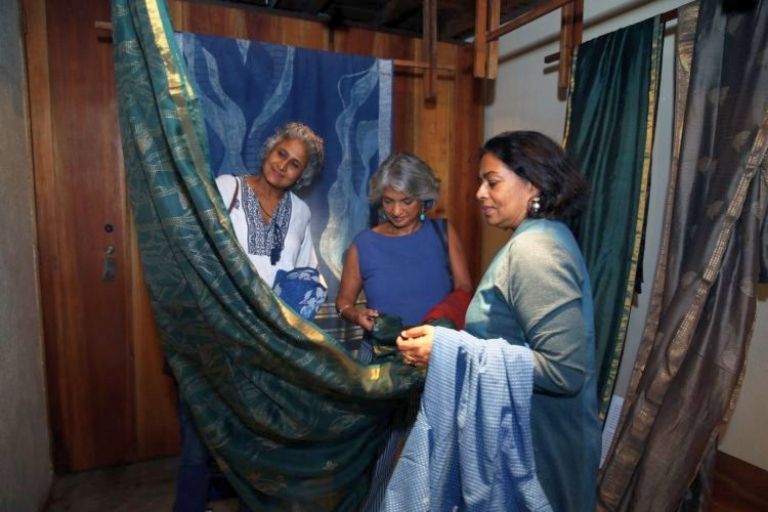
Her work with Aavaran, the Rajasthani brand she founded, offers an example of this approach. Aavaran also held a trunk show at Rithihi during the session, giving visitors a look at the results of its work with artisans.
The event showed that craft revival is not simply about creating new products. It also requires relationships between designers and the people who hold the knowledge.
The people behind the craft matter too
The screening of Swati Dandekar’s documentary “Neel Raag” offered another view of the challenge.
The film explores indigo dye-making communities and the networks that keep the craft alive.
Those networks can include dyers, woodblock makers, designers and artisans. Each plays a role in the process.
The story of indigo also shows how deeply a craft can become part of people’s lives. The colour moves from the dyeing process into the materials, hands and communities that work with it.
As a result, losing a craft can also mean losing an entire system of knowledge and livelihoods.
For Rithihi, the discussion was an opportunity to ask a larger question: How can communities revive traditional crafts while keeping the knowledge and people behind them at the centre?
The organisation plans to continue that conversation through its Textile Tales series, focusing on South Asia’s handcrafted clothing traditions and the communities that keep them alive.

More:
Miss USA Adds Commercial Appeal As Virginia’s Justus Kelley Makes Pageant History
Panel Discussion Product Launches Women in Action
Last modified: August 29, 2026