Sri Lanka’s education debate should not be reduced to one question: How many classrooms should receive smart boards?
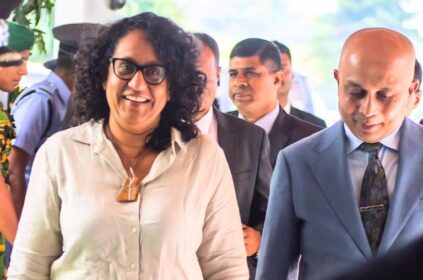
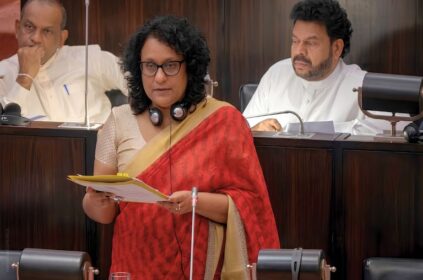
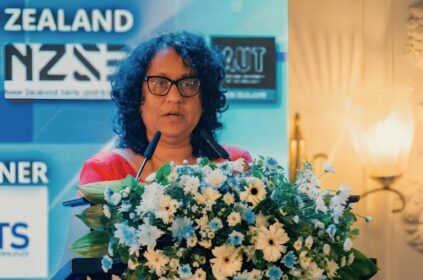
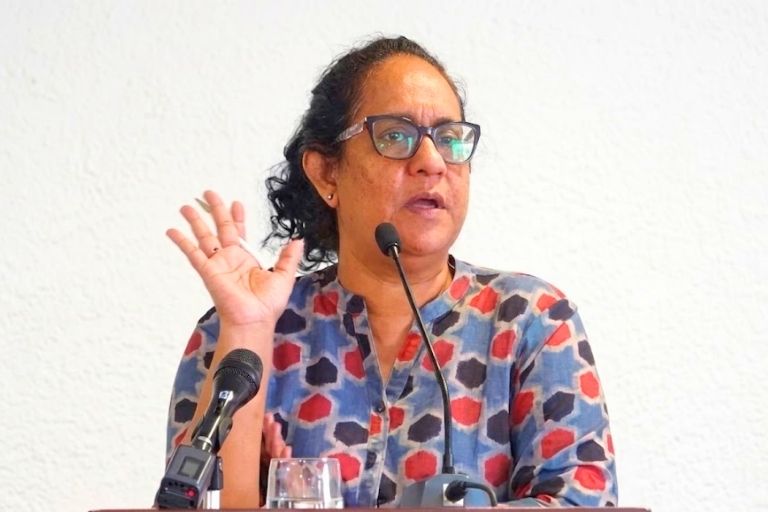
Prime Minister Harini Amarasuriya has said the government will not provide smart boards to every classroom because they are not necessary at every level of education.
She has also asked school principals not to collect money from parents to buy smart boards.
The Prime Minister said children should receive technology at an appropriate age. She also warned that unnecessary use of devices could create other problems, including addiction.
The important part of this debate is therefore not whether Sri Lankan schools should use technology.
They should.
The bigger question is where limited education funds will produce the greatest improvement in learning.
Prime Minister Harini Amarasuriya says the government will not provide smart boards to every classroom, as they are not necessary at all levels of education.
She emphasized that children should be introduced to technology at an appropriate age and urged school principals not to… pic.twitter.com/9bfjFO0Snl
— NewsWire 🇱🇰 (@NewsWireLK) September 19, 2026
Technology Is Only One Part of Education
Sri Lanka is already investing in digital education.
The government has been installing smart boards, providing internet facilities and supplying computers to schools. It is also developing the National Education Management Information System (NEMIS) and the e-Thaksalawa Learning Management System.
In July, the government reviewed progress on school digitalisation and discussed connecting schools to digital systems, expanding the LMS and improving e-Thaksalawa.
The government also plans to complete fibre connectivity for schools by the end of 2026 where practical. It said wireless or satellite solutions could serve schools where fibre connections are not feasible.
This suggests that the technology debate is already broader than smart boards.
A smart board without reliable internet has limited value.
A connected classroom without good digital content also has limited value.
And technology cannot replace a teacher.
The Prime Minister has previously made this point directly. She said digital technology should support teachers rather than replace them. She also stressed the need for quality educational content and proper teacher training.
So Where Should the Money Go?
If Sri Lanka wants better returns from education spending, investment can be viewed across several layers.
1. Teachers First
The most important investment remains the people who teach.
Technology can display a lesson.
A good teacher can explain why the lesson matters, identify where a child is struggling and change the approach.
That makes teacher recruitment, training and professional development central to education investment.
The current reform process already includes teacher training for the new curriculum. Parliament reported that teacher training was under way for the education reforms planned from 2027.
2. Digital Content
A smart classroom should not simply become a larger screen for showing videos.
The government itself has said digital classrooms need quality content that matches the national curriculum.
This creates an important investment opportunity.
Sri Lanka needs digital lessons that teachers can use.
It needs interactive learning material.
It needs assessments that show whether students understand the subject.
It also needs content that works for children with different learning needs.
The value is therefore not in the screen.
The value is in what the screen helps a child learn.
3. Internet and Basic Digital Infrastructure
Before asking every school to use digital learning, the country needs reliable connectivity.
This is already part of the government’s digitalisation plans.
The July review focused on connecting schools through fibre and finding alternative solutions where fibre is not practical.
This is important because a digital education system cannot work equally if some schools have reliable connections while others do not.
4. Devices Where They Solve a Real Problem
This is where the Prime Minister’s smart-board position becomes important.
Not every classroom needs the same equipment.
A primary classroom, a secondary classroom and a technical education classroom may have different needs.
The government has already used a targeted approach in some projects. For example, the Education Ministry reported that 1,000 smart boards were provided to 1,000 schools under an earlier project.
Another government project approved equipment for 500 selected schools and a model smart classroom as part of a US$20 million Chinese-supported digital education project.
The question should therefore be:
Which schools need which technology, and why?
That is more useful than setting a target for the number of smart boards alone.
The Bigger Investment Is Human Capital
Sri Lanka’s education challenge is ultimately a human-capital challenge.
The country needs students who can read well, think clearly, use technology, solve problems and adapt to changing work.
That requires more than hardware.
It requires teachers who are equipped to teach new skills.
It requires updated curriculum content.
It requires schools with reliable infrastructure.
It requires digital access.
It requires vocational pathways.
And it requires systems that identify whether public spending is improving student outcomes.
The government’s planned education reforms already point in this direction.
The reforms scheduled from 2027 include changes to the curriculum, teacher training, vocational education and new modules covering areas such as social cohesion, law and ethics.
The Real Test: What Does Each Rupee Produce?
This is where Sri Lanka’s education investment debate should go next.
Instead of asking how many smart boards were purchased, policymakers should ask:
How many students gained access to quality learning?
How many teachers received useful training?
How many schools gained reliable internet?
How much quality digital content was created?
Did learning outcomes improve?
Did the gap between better-resourced and under-resourced schools narrow?
These questions make education spending measurable.
A smart board can be counted immediately.
Better learning takes longer to measure.
But better learning is the result Sri Lanka ultimately needs.
The Prime Minister’s decision not to place a smart board in every classroom should therefore not be viewed simply as a decision against technology.
It raises a more important question about education investment.
Sri Lanka does not need to make every classroom look digital. It needs to make every child’s education better.
Last modified: September 20, 2026