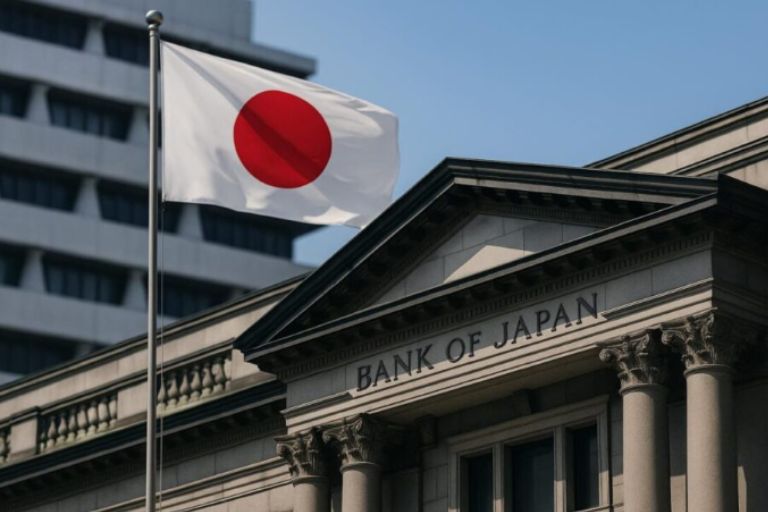
The era of ultra-low interest rates in Japan continues to fade as policymakers shift their attention from economic stimulus to inflation control.
On Tuesday (16), the Bank of Japan (BOJ) raised its benchmark interest rate to 1%, the highest level since 1995, as rising energy costs and broadening price pressures continue to influence the country’s economic outlook.
The move highlights how central banks around the world are increasingly prioritising inflation risks, even as global growth remains uncertain.
Inflation Takes Centre Stage
The BOJ increased its short-term policy rate from 0.75% to 1%, marking its first rate hike since December.
In a statement, the central bank said risks to economic growth from the Middle East conflict had eased due to progress in securing alternative energy supplies.
However, officials warned that inflationary pressures were becoming more widespread.
The BOJ noted that companies were passing rising energy costs through supply chains at a relatively fast pace, increasing the likelihood of higher consumer prices across multiple sectors.
“Taking into account that medium- and long-term inflation expectations have also continued to increase, there is a risk of underlying inflation deviating above our price target,” the BOJ said.
Deputy Governor Shinichi Uchida, speaking on behalf of Governor Kazuo Ueda who missed the meeting for medical treatment, said inflation risks now require closer attention.
“Compared with the previous meeting, the risk of a sharp deterioration in the economy has diminished. On the other hand, price rises are broadening and there is a risk underlying inflation may deviate from our target,” Uchida said.
Markets Welcome Gradual Approach
The decision was approved by a 7-1 vote.
Board member Toichiro Asada opposed the move, arguing that downside risks to growth from the Middle East conflict remained greater than inflation risks.
Financial markets reacted positively to the decision.
The Nikkei 225 rose as much as 1% and reached a new record high above 70,000 after the announcement.
Analysts said investors were relieved that the BOJ did not pursue a larger increase.
Hirofumi Suzuki, chief FX strategist at SMBC, said:
“If anything, the focus had been on whether a 50-bp rate hike would be proposed, but no such proposal was made. In terms of the future rate-hike path, this is positive for risk asset prices, as it suggests that a sharp rate hike is likely to be avoided.”
“The BOJ is likely to continue raising rates at a gradual pace of around once every six months to one year,” he said.
More Rate Hikes Possible
The BOJ also announced it would pause its bond taper programme from April next year and continue purchasing approximately 2 trillion yen worth of government bonds each month.
Economists expect inflation to remain above the central bank’s 2% target later this year, supported by higher energy prices, rising wholesale costs and a weak yen.
The latest move places Japan alongside other major central banks that are maintaining a tighter policy stance as inflation concerns continue to outweigh growth risks.
Last modified: June 17, 2026