The first quarter of 2026 tested the economy on multiple fronts. The period covered the immediate aftermath of Cyclone Ditwah and the first full month of the U.S.-Israel conflict involving Iran. Yet economic activity continued to expand, supported by growth across agriculture, industry, and services.
According to National Accounts Estimates released by the Department of Census and Statistics (DCS) yesterday, the economy recorded 5.1% growth in the first quarter of 2026, up from 4.8% in the December 2025 quarter.
The figure also marks the strongest first-quarter growth recorded since 2021.
Key Economic Highlights
- GDP growth: 5.1%
- GDP at constant prices: Rs. 3,652,503 million
- GDP at current prices: Rs. 9,164,652 million
- Increase in nominal GDP: 11%
- Import volumes: Up by around 20% year-on-year
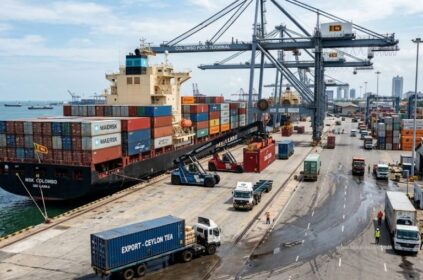
According to the DCS, increased imports of capital and intermediate goods supported domestic production and economic activity during the quarter.
Three Major Sectors Remain in Growth Territory
All three major sectors of the economy expanded during the first quarter.
Sector Contributions to GDP
- Services: 54.2%
- Industry: 27.2%
- Agriculture: 7.3%
- Taxes less subsidies on products: 11.3%
Sector Growth Rates
- Industry: 7.2%
- Services: 3.4%
- Agriculture: 1.1%
The DCS noted that construction, transport activity, trade volumes, and financial services were among the factors supporting economic growth.
Construction Leads Industrial Expansion
Industrial activities recorded the strongest growth among the three major sectors.
Fastest-Growing Industrial Activities
- Mining and quarrying: 19.5%
- Construction: 16.3%
- Water collection and supply: 11.4%
- Electricity and gas supply: 7.5%
Manufacturing activities as a whole expanded by 2.8%.
Among manufacturing industries, the strongest growth was recorded in:
- Chemical and pharmaceutical products: 22.8%
- Basic metal products: 19.4%
- Non-metallic mineral products: 12.9%
- Food, beverages and tobacco products: 5.8%
However, some industries recorded declines.
Manufacturing Activities That Contracted
- Rubber and plastic products: 16.8%
- Other manufacturing activities: 13.9%
- Textiles and apparel: 3.7%
- Machinery and equipment: 2.5%
Agriculture Returns to Growth
Agricultural activities expanded by 1.1%, compared to a contraction of 1.3% during the corresponding period last year.
The strongest growth was recorded in:
- Growing of oleaginous fruits including coconuts: 64.8%
- Plant propagation: 18.7%
- Forestry and logging: 15%
- Growing of vegetables: 3.6%
Several agricultural activities, however, remained under pressure.
Agricultural Activities That Declined
- Freshwater fishing and aquaculture: 37.8%
- Marine fishing and aquaculture: 25.7%
- Rubber cultivation: 13.6%
- Rice cultivation: 5.8%
- Tea cultivation: 3.6%
Services Sector Continues to Expand
The services sector, which remains the largest contributor to GDP, expanded by 3.4% during the quarter.
Top-Performing Service Activities
- Insurance, reinsurance and pension funding: 22%
- IT programming and consultancy: 16.1%
- Financial services: 12.8%
- Postal and courier services: 5.8%
- Accommodation and food services: 5.4%
Transportation, telecommunications, trade, healthcare, education, and professional services also recorded growth.
Public administration and defence was the only service activity to contract, declining by 1.2%.
Recovery Momentum Continues
According to the DCS, economic activity continued to recover despite weather-related disruptions and geopolitical developments that affected global markets during the quarter.
The latest figures suggest that domestic demand, construction activity, transport services, and financial sector growth continued to support the broader economy, helping maintain growth momentum during a challenging operating environment.
Central Bank of Sri Lanka (CBSL) Numbers & Indexes
Last modified: June 16, 2026