Electric vehicle (EV) imports could face new testing and certification requirements as officials push for mandatory standards covering vehicles, batteries, controllers and charging stations.
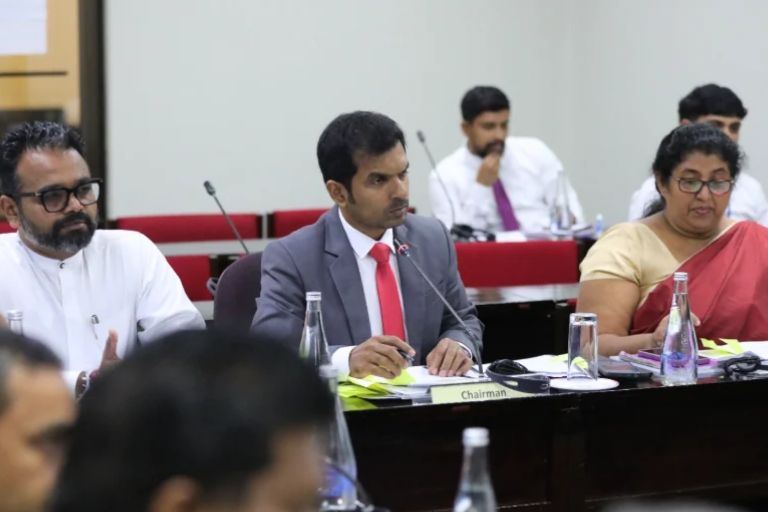
The proposal was discussed at a meeting of the Sectoral Oversight Committee on Science, Technology and Digital Transformation. Officials highlighted the absence of mandatory regulations governing these products imported into the country.
For EV importers, the proposed changes could affect the technical requirements for bringing vehicles and related equipment into the market. However, no new regulations or compulsory certification requirements have been approved yet.
Does NERDC Has Facilities to Test EV Batteries?
The committee discussed the testing facilities available at the Sri Lanka National Engineering Research and Development Centre (NERDC). The institution has the capacity to test several battery performance measures. These include capacity, durability and lifespan.
Officials told the committee that relevant standards should be established. They also stressed that testing and certification should become compulsory. The proposed framework covers more than complete electric vehicles. Batteries, controllers and charging stations are also included in the discussions.
This is an important area for businesses importing EV components and charging equipment. Any future certification system could introduce additional technical checks before products enter the market.
Vehicle Conversions Also Need Safety Standards
The committee also examined the technology used to convert fuel-powered vehicles into electric vehicles. Discussions covered the need for training programmes and regulatory mechanisms. Officials also highlighted the importance of developing safety standards for converted vehicles.
These requirements could affect businesses involved in EV conversions, including workshops and equipment suppliers. A clear regulatory framework would be needed to define the technical and safety requirements for such conversions.
Research Institutions and Innovation Under Review
Beyond electric vehicle regulation, the committee examined the performance of state research institutions and ways to improve their work. Officials highlighted shortages of engineers and researchers. They also called for suitable salary and allowance schemes to attract and retain qualified staff.
The committee discussed improving research management and commercializing research outcomes. It also considered consolidating institutions that perform similar functions.
The Sri Lanka Inventors Commission’s electric fencing projects also came under discussion. Three of the four projects implemented so far were reported to be operating successfully. The committee further considered university-linked incubation centres and digital platforms to promote innovation.
Another proposal involved amending the Intellectual Property Act to introduce a Petty Patent system. The proposed system aims to protect inventors’ rights and speed up the commercialization of their inventions.
The committee met under the chairmanship of MP Dr Janaka Senarathna. It also reviewed annual reports from NERDC, the National Science and Technology Commission, the Sri Lanka Inventors Commission and the Ministry of Science and Technology.
For EV importers and related businesses, the next development to watch is whether the government moves from discussions towards formal standards and compulsory certification.
Panel Discussion Parliamentary Updates
Last modified: November 12, 2026