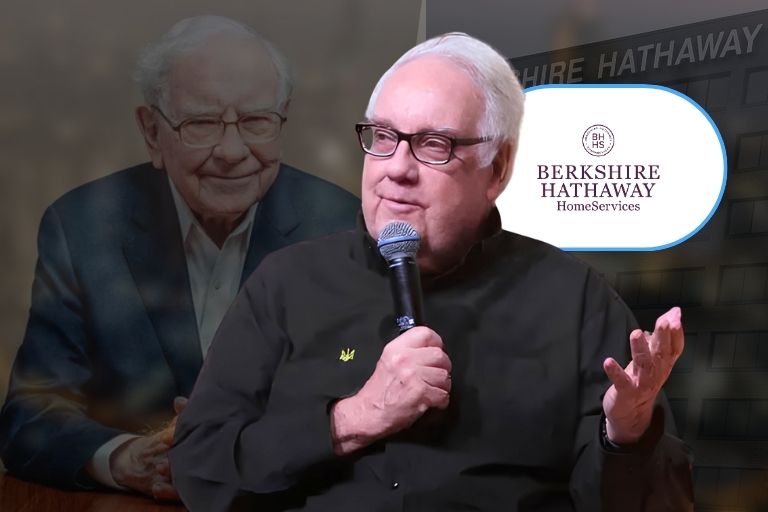
Howard G. Buffett has taken over as chairman of Berkshire Hathaway as his father, Warren Buffett, steps back from the role after more than six decades at the company.
Berkshire Hathaway elected Howard Buffett as chairman on September 18. He has served on the company’s board since 1993 and will take the role as a non-executive chairman.
However, Howard will not run Berkshire’s businesses. Greg Abel remains chief executive and is responsible for running the company.
Instead, Howard’s main role will be to help protect the culture and values that Warren Buffett built at Berkshire.
Who Is Howard Buffett?
Howard Buffett, 71, has spent more than three decades on Berkshire’s board.
He has also built a career outside Berkshire. Since 1999, he has served as chairman and chief executive of the Howard G. Buffett Foundation, which focuses on areas such as global food security and conflict mitigation.
He also served as a United Nations Goodwill Ambassador Against Hunger for the World Food Programme for nearly a decade.
Howard has held board roles at several public and private companies. These include The Coca-Cola Company, Coca-Cola Enterprises, Archer Daniels Midland and Lindsay Corporation. He also served as chairman of the board at Lindsay Corporation.
His new Berkshire role, however, is different from a management position.
Warren Buffett made that distinction clear in his letter to shareholders. He said Greg Abel runs the company, while Howard will guard its culture and values.
A Different Role for the Buffett Name
The change gives Berkshire a clear split between management and board leadership.
Greg Abel took over as CEO earlier this year after Warren Buffett handed over the executive role. Howard now takes the chair, while Warren Buffett becomes chairman emeritus and remains on the board.
That means Warren Buffett has not completely left Berkshire.
At 96, he will continue to serve as a director and offer his judgment and perspective to the company. The move completes another major step in Berkshire’s long-planned succession process.
Warren Buffett’s Legacy Behind the Transition
Warren Buffett took control of Berkshire in 1965 and spent more than six decades building it into a diversified business group.
The company now has businesses across insurance, energy, rail transportation, manufacturing, services, and retail. Its investment portfolio also includes major listed companies.
His leadership also shaped Berkshire’s approach to business. The company became known for giving managers wide control over daily operations while focusing on long-term decisions and capital allocation.
Now, Howard Buffett has a different task.
He will not try to replace his father as Berkshire’s chief executive. Instead, his role is to help preserve the culture that has become closely linked with Warren Buffett and the company.
For Berkshire, the next chapter therefore has three distinct figures: Greg Abel running the business, Howard Buffett overseeing the board, and Warren Buffett remaining as a director.
Last modified: September 21, 2026