When people buy cooking oil, spices, cosmetics or even toys, they often assume the products meet basic safety standards.
However, many consumers have no practical way to verify that. The government’s new “V-Pramithi” program aims to change that by bringing more scientific testing into the marketplace.
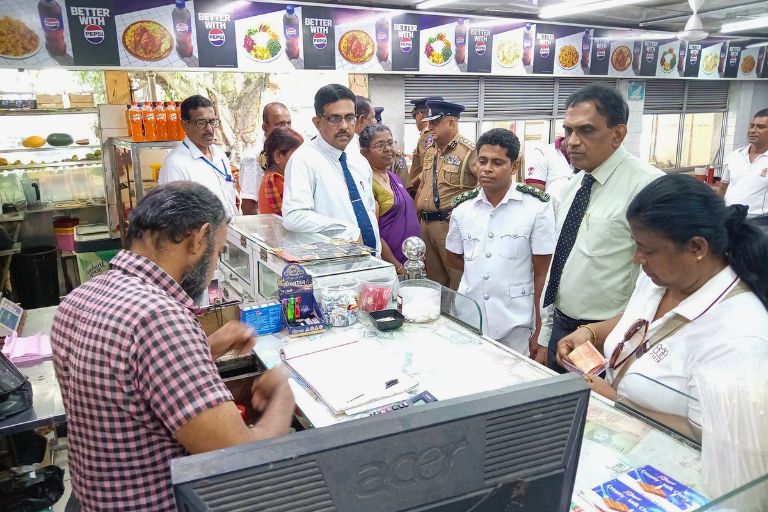
The Ministry of Science and Technology launched the national program on Monday (28) at the Pettah Public Market under the “Clean Sri Lanka” initiative and as part of National Integrity Week.
While the first inspections focused on one of the country’s busiest trading hubs, the program signals a broader effort to strengthen product quality monitoring across the market.
Random product testing moves into the marketplace
Officials began the program by visiting shops at the Pettah Public Market and collecting random samples of everyday consumer goods. The items included street food, coconut oil, toys, jaggery, treacle, cosmetics, spices and electrical appliances.
The samples will now undergo laboratory testing to assess their quality, composition and safety. The tests will also examine whether the products meet the required standards before reaching consumers.
Science and Technology Minister Professor Chrishantha Abeysena said, “The program will carry out comprehensive assessments of commonly used consumer goods.
He further said technical experts will help ensure that food, beverages and other products entering the market remain free from harmful substances, including toxins and heavy metals“.

Who will support this?
The Ministry has brought together several scientific institutions to support the initiative.
The Sri Lanka Standards Institution (SLSI), Industrial Technology Institute (ITI) and Sri Lanka Atomic Energy Board will provide technical expertise for testing and analysis.
The Ministry of Science and Technology is implementing the program with support from the Ministry of Health, Consumer Affairs Authority and Sri Lanka Police.
Public Health Inspectors, officials from relevant institutions and representatives of technical agencies also attended the launch.
The collaboration reflects a wider approach to product safety, combining scientific testing, public health oversight and market enforcement rather than relying on inspections alone.
Building confidence through regular monitoring
The Ministry says V-Pramithi will continue beyond the initial inspections. Regular testing could help identify unsafe products before they spread widely through the market, while also encouraging manufacturers and traders to maintain recognized quality standards.
For businesses, the program may place greater attention on product quality and compliance. Companies that already follow recognized standards could benefit from stronger consumer confidence, while those that fall short may face closer scrutiny as testing becomes more routine.
For consumers, the initiative represents a shift towards evidence-based monitoring of products used in daily life. Whether it delivers lasting improvements will depend on how consistently testing continues, how quickly findings are acted upon and how transparently the results are shared with the public.
More:
Eight Mangrove Forest Areas in Puttalam Now Protected
Economic & Regulation Government Decisions
Last modified: July 29, 2026