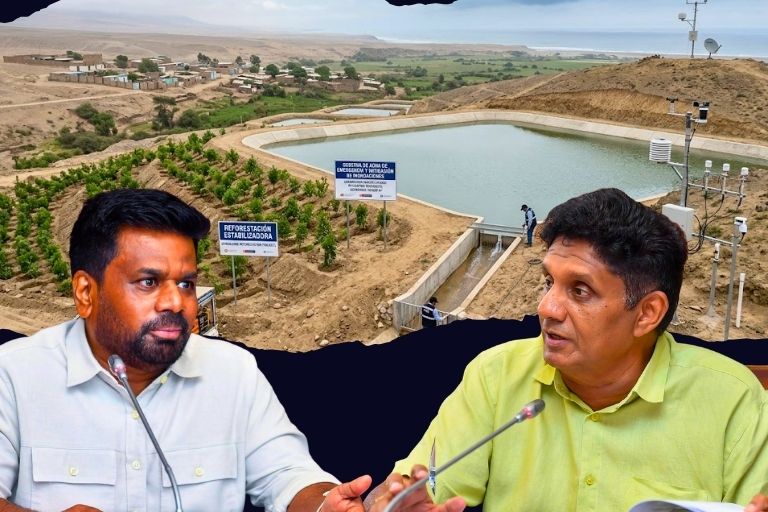
The Opposition has proposed a series of policy measures to strengthen Sri Lanka’s climate resilience and disaster preparedness, warning that the country should prepare early for the expected impacts of the 2026–2027 El Niño cycle.
Speaking at the National Council for Disaster Management, chaired by President Anura Kumara Dissanayake, Opposition Leader Sajith Premadasa said climate security should become a national priority supported by scientific planning and cooperation across all sectors.
Premadasa said Sri Lanka should shift from responding to disasters after they occur to preparing for them in advance. He proposed an anticipatory approach based on scientific forecasting, climate risk assessments and early preparedness to reduce the impact of droughts, floods and other extreme weather events.
Among the proposals was making climate resilience a shared responsibility across government institutions responsible for agriculture, water resources, energy, health, finance, defence, provincial administration and local government.
He also called for integrated reservoir management to improve water security, wider adoption of climate-smart agriculture to strengthen food production, and the modernization of early warning systems through impact-based forecasting that provides communities with practical information before disasters occur.
In addition, Premadasa proposed expanding disaster risk financing, improving preparedness for heatwaves and climate-related public health emergencies, strengthening critical infrastructure and establishing a National Climate Risk and Disaster Intelligence Centre to support evidence-based decision-making.
He said Sri Lanka could also adopt successful practices used by countries such as India and Australia in climate forecasting, agricultural contingency planning and disaster preparedness.
Looking beyond the anticipated El Niño cycle, Premadasa proposed preparing a Presidential White Paper on National Climate Resilience and Disaster Preparedness to establish a long-term policy framework that future governments could continue implementing.
Why It Matters
Climate-related disasters can affect agriculture, food production, water supplies, electricity generation, transport infrastructure, tourism and public health. Earlier planning and stronger coordination could reduce economic losses, improve disaster response and help protect communities from increasingly frequent extreme weather events.

Government Decisions Opposition Presidential Affairs
Last modified: June 30, 2026