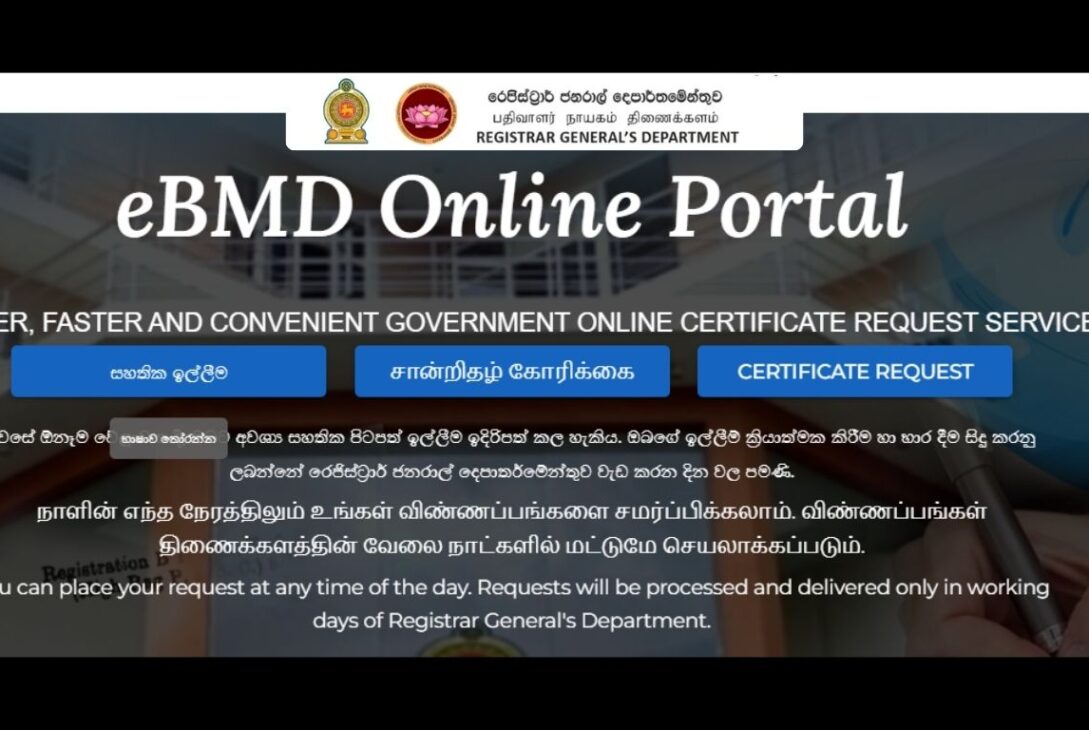
The Government’s digital transformation programme has reached a major milestone with the full implementation of the Electronic Birth, Marriage and Death (e-BMD) system across overseas missions.
The initiative now enables Sri Lankans living abroad to obtain certified civil documents quickly and efficiently through diplomatic missions.
According to the latest progress report of the Registrar General’s Department (RGD), the e-BMD system is fully operational in 62 embassies and high commissions worldwide. The programme was initiated with the intervention of the Presidential Secretariat, highlighting high-level commitment to public sector modernisation.
Within one year of its full rollout, the system has facilitated the issuance of more than 8,000 certified birth, marriage, and death certificates through overseas missions. Officials say this reflects strong uptake and growing confidence among the diaspora.
The initiative followed a successful pilot phase in early 2025. It allows citizens residing overseas to obtain certified copies directly through their respective missions. Applicants no longer need to travel back to Sri Lanka or rely on manual documentation processes.
The service now supports citizens in key diaspora destinations, including the United Kingdom, Australia, Canada, the United States, the United Arab Emirates, Italy, France, Germany, Japan, Malaysia, and India, among other regions.
By linking foreign missions directly to the Registrar General’s Department, the platform has reduced processing times while strengthening document authenticity and security. The RGD’s ICT Division provides real-time technical support to ensure uninterrupted service delivery.
Officials note that the system has eased administrative burdens on both citizens and missions. It has also improved access to documentation required for employment, education, immigration, and legal purposes.
The nationwide overseas deployment of the e-BMD platform reflects a broader strategy to build a modern, technology-driven public service framework. It also strengthens engagement with the global diaspora through improved service delivery.
Last modified: February 15, 2026