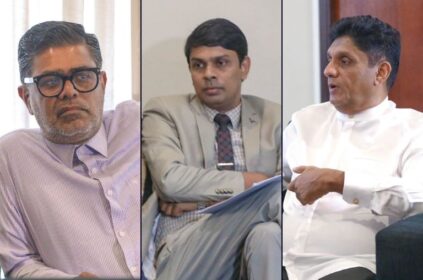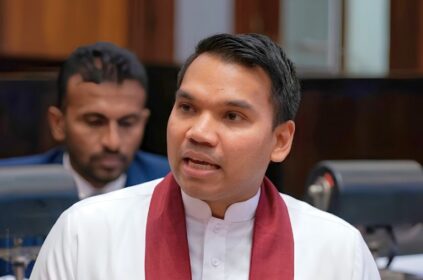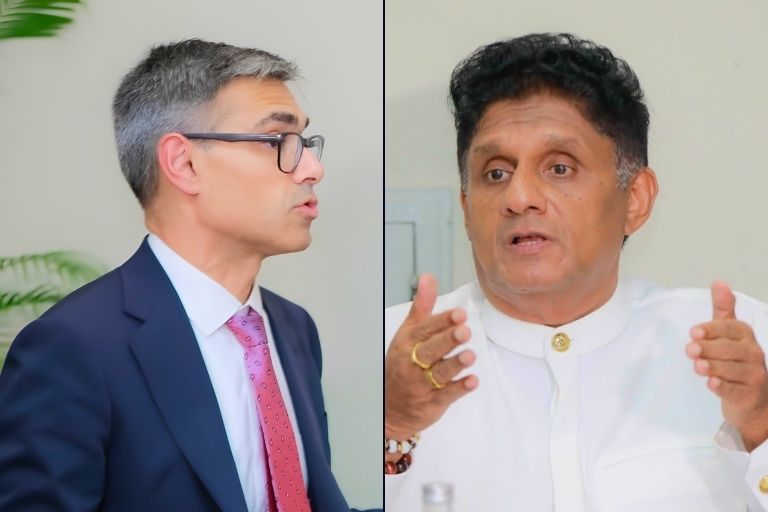
Opposition Leader Sajith Premadasa and an IMF delegation have discussed the economic path beyond the current IMF-supported program. The current Extended Fund Facility (EFF) ends in March 2027.
The meeting took place at Parliament. It focused on ongoing reforms and the steps needed to keep the economy stable after the program ends.
The discussions covered foreign exchange reserves, debt, government finances and economic growth. Both sides also reviewed the economic targets that should be reached before the current program ends.
These targets include sound debt policies, healthy public finances, lower external financing needs and stronger long-term economic growth.
Economic Stability After March 2027
Premadasa said,
“Fiscal reforms should not place too much pressure on working people and families with lower incomes. More attention should go to poverty, affordability and inflation, as families and small businesses continue to face financial pressure.
The success of the IMF program should not depend only on key economic figures. Policymakers should also look at how reforms affect families, workers and businesses.
There should also be a clear economic plan beyond March 2027. This plan should maintain economic stability and help the country deal with future external shocks.”
Focus on MSMEs and Household Costs
The meeting also covered the financial pressure faced by micro, small and medium-sized enterprises (MSMEs).
The discussion included debt problems and their effect on small businesses and entrepreneurship. The two sides also discussed the need to measure the impact of economic reforms on poverty, employment, household income and affordability.
Premadasa stressed the need for reliable and timely data on households and poverty.
He said this data would help policymakers understand the social impact of economic reforms.
The Opposition Leader also said economic stability should lead to better living standards, lower poverty and higher household incomes.
57
What Happens After the IMF Programme?
Premadasa asked what economic conditions would allow the country to move beyond the current EFF program without another IMF financing scheme.
He also asked when the country could need further financial support from the IMF.
The discussions took place as the IMF continues its work under the current EFF program.
The program schedule includes the seventh review in October 2026 and the eighth review in March 2027.
The eighth review will assess performance through the end of December 2026.
The IMF delegation was led by Mission Chief Evan Papageorgiou.
The delegation also included Enrique Flores Curiel, Dinar Prihardini, Ursula Wiriadinata, Ozlem Aydin, Yorbol Yakhshilikov, Klakow Akepanidtaworn and Yan Chen.
IMF Resident Representative Martha Woldemichael and Manavee Abeywickrama also joined the delegation.
Representatives of the Samagi Jana Balawegaya also attended the meeting.

Samagi Jana Balawegaya representatives were MPs Harsha de Silva, Harshana Rajakaruna, Kabir Hashim, Hector Appuhamy, Ajith P. Perera and Mujibur Rahuman, as well as Professor Prasanna Perera, Talal Rafi, Kusum Wijetilake, Dilum Alagiyawanna and Suranga Ranasinghe.
International Monetary Fund (IMF) Opposition
Last modified: September 23, 2026