Central banks are rethinking how they manage foreign reserves as geopolitical risks, new technology and changes in global finance reshape the way countries protect their financial buffers.
The issue came into focus in Colombo when the Central Bank of Sri Lanka (CBSL) held its first Reserve Management Conference on September 10 and 11.
The conference brought together about 50 central bankers, sovereign asset managers, policymakers, economists and investment experts.
Representatives from major financial institutions and central banks took part. They included the Reserve Bank of India, Bank Indonesia, Bank Negara Malaysia, Bank of Korea, Bank of Thailand, Banque de France and Swiss National Bank.
The Asian Development Bank, Asian Infrastructure Investment Bank, Bank for International Settlements, World Bank and World Gold Council also took part.
Building stronger foreign reserve buffers
One of the main topics was how countries can build and strengthen their foreign reserve buffers.
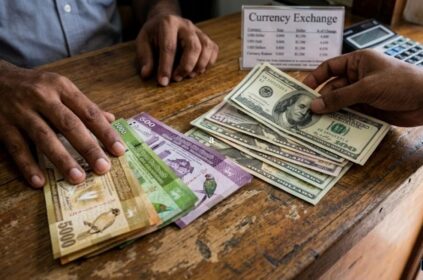
Foreign reserves give countries access to foreign currency when they need to pay for imports, service external debt or manage periods of financial stress.
The discussions also looked at how geopolitical fragmentation could affect Asia and the global economy.
For reserve managers, this creates a wider challenge. They must protect the value and liquidity of national reserves while dealing with a global economy that is becoming more uncertain.
The conference also examined the continued role of the US Dollar in international reserves.
At the same time, participants discussed gold and other assets that central banks can use to diversify their reserve portfolios.
Gold, digital assets and AI enter the discussion
Reserve management is also moving into areas that were less central to traditional central banking.
Participants discussed the possible role of digital and tokenised assets in official reserves.
They also examined the role of gold and other alternative assets as reserve managers consider different ways to spread risk.
Technology was another major focus.
The conference explored how artificial intelligence could help central banks make investment decisions, study markets, improve portfolio management and identify risks.
AI could give reserve managers faster access to market information and help them assess large amounts of data. However, reserve management still requires strict controls because central banks manage public financial assets.
Why this matters for Sri Lanka
The focus on stronger reserve buffers has particular relevance for Sri Lanka after the country’s recent foreign exchange crisis.
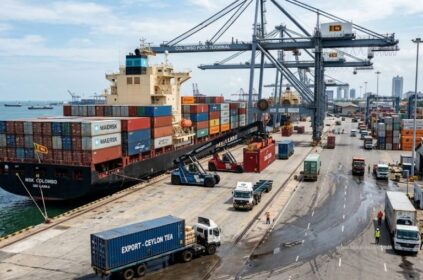
The crisis showed how quickly limited foreign currency availability can affect imports, debt payments and the wider economy.
The conference does not announce a new reserve strategy for Sri Lanka. Instead, it provides a platform for CBSL and international institutions to discuss how reserve managers can respond to a changing financial system.
The presence of major central banks and international financial institutions also gives CBSL an opportunity to exchange experience with institutions that manage large official reserve portfolios.
The discussions in Colombo point to a broader change in central banking. Reserve management is no longer only about holding foreign currencies.
It now involves decisions on diversification, gold, technology, geopolitical risk and new forms of financial assets.
For countries seeking stronger financial buffers, the challenge will be to balance safety, liquidity and returns while preparing for a more uncertain global economy.
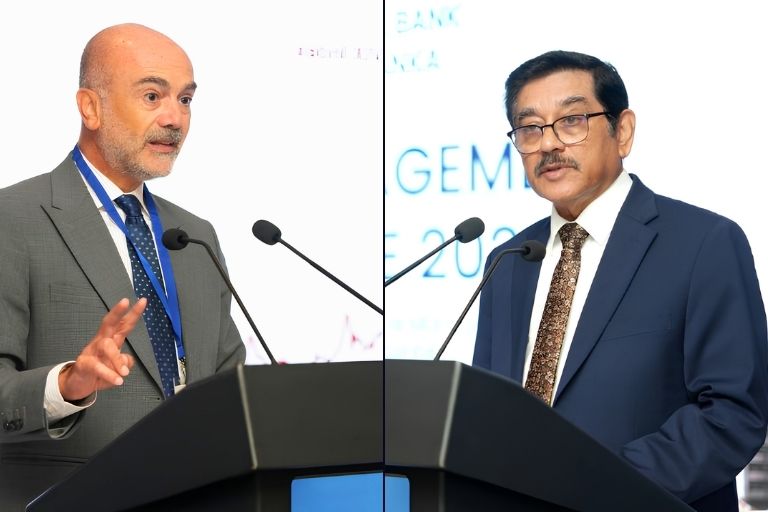
Photo Caption: Left Mr. Domenico Nardelli, Treasurer of the AIIB, delivering the Special Guest Address at the conference; Right Governor of the Central Bank of Sri Lanka, Dr. Nandalal Weerasinghe,
delivering the keynote
Central Bank of Sri Lanka (CBSL) Panel Discussion
Last modified: September 16, 2026