Economic activity continued to expand during the first half of 2026. Policymakers now also have a clear three-year target for bringing inflation closer to 5%.
Real GDP growth reached 4.7% year-on-year in the first half of 2026, according to the Central Bank’s latest monetary policy assessment. At the same time, September headline inflation stood at 8.0%. This shows that price pressures remain an important part of the economic picture.
The latest data points to an economy that is continuing to move forward. The focus now shifts towards maintaining growth and achieving greater price stability.
Growth Continues Across Key Areas
Construction activity remained in expansion territory in August. The Construction Purchasing Managers’ Index recorded 59.4. More importantly, the New Orders Index rose to 62.5, up from 57.1 in July. The increase was mainly linked to government-funded projects.
Employment and purchases also expanded during the month. However, shortages of skilled workers and raw materials affected activity. A shortage of bitumen also placed additional pressure on road construction.
Businesses surveyed by the Central Bank remained positive about the next three months. Newly awarded projects supported that outlook. This suggests that activity is continuing. However, the pace of expansion is being shaped by the availability and cost of key inputs.
Inflation Remains Above the New 5% Target
Headline inflation remained at 8.0% in September. It was unchanged from August. Food inflation increased slightly to 8.7%, while non-food inflation remained at 7.7%. Core inflation, which excludes some more volatile price movements, rose from 5.1% to 5.4%.
The Central Bank expects inflation to remain in the high single digits through the first quarter of 2027. It then expects inflation to move towards 5%.
That 5% level now has a formal policy framework behind it.
A new Monetary Policy Framework Agreement signed on October 1 sets a 5% quarterly headline inflation target for the next three years. The agreement also includes an accountability margin of plus or minus two percentage points. The framework is reviewed every three years. The latest review considered economic conditions, historical evidence, monetary policy, stakeholder views and international experience.
External Buffers Continue to Support the Economy
The external sector also showed several positive developments. The current account recorded a US$133 million surplus in August. This ended a four-month period of deficits.
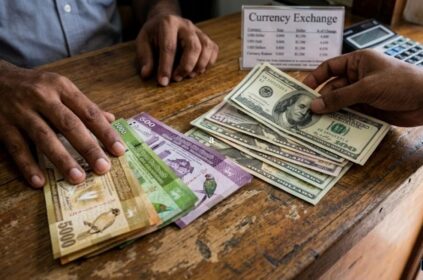
Foreign exchange reserves reached US$6.9 billion at the end of August. Central Bank purchases of foreign currency supported the increase.
Worker remittances remained another important source of foreign exchange. They reached US$749 million in August, taking the January-August total to US$6.1 billion. This represents an increase of 19.8% from the same period last year.
Tourism provided another source of foreign exchange, although performance was mixed. Tourist arrivals during the first eight months were down 2%. Tourism earnings also declined 10% to about US$2.1 billion.
August alone recorded a 2.1% increase in tourism earnings.
Trade and Energy Costs Remain Important Factors
The external position also carries some pressure points. The merchandise trade deficit widened to US$7.2 billion during the first eight months. It stood at US$4.3 billion during the same period of 2025.
Fuel remained a large part of the import bill. Spending on fuel imports reached around US$4 billion during January-August. That was 61.6% higher than a year earlier. At the same time, monthly fuel import spending had declined for four consecutive months. This indicates some improvement in the recent trend.
Motor vehicle imports reached US$1.68 billion during the first eight months. However, August imports were 24.2% lower than a year earlier. These figures show why the external position needs to be viewed through several indicators. A single monthly result does not provide the complete picture.
More People Are Taking Part in the Labour Market
The labour market also recorded a change during the second quarter. The unemployment rate increased to 4.0%. It was 3.8% during the corresponding quarter of 2025. At the same time, the labour force participation rate increased from 49.3% to 50.0%.
The two movements are important when viewed together. More people were participating in the labour market, while the unemployment rate also edged higher. The figures themselves do not show which sectors or groups were behind these changes. However, they provide another measure of how the economic recovery is developing.
The Policy Focus Now Has a Clear Direction
The latest figures present several parts of the economy moving at the same time. Growth is continuing. Construction orders are increasing. Remittances are providing strong foreign exchange support. Reserves have also strengthened.
At the same time, inflation remains above the formal 5% target. The trade deficit remains sizeable, while energy costs continue to influence the external position. The Central Bank has kept the Overnight Policy Rate at 8.75%. It has also maintained a forward-looking and data-driven approach to monetary policy.
Taken together, the latest indicators show an economy moving through a period of continued expansion. At the same time, policymakers are working towards a lower and more stable inflation environment. The next stage will be measured not only by how fast economic activity grows. It will also depend on how steadily price pressures move towards the 5% target.
More:
Rs.600 Million Set Aside for Top A/L Students to Gain International Exposure – Prime Minister
Central Bank of Sri Lanka (CBSL) Numbers & Indexes
Last modified: October 3, 2026