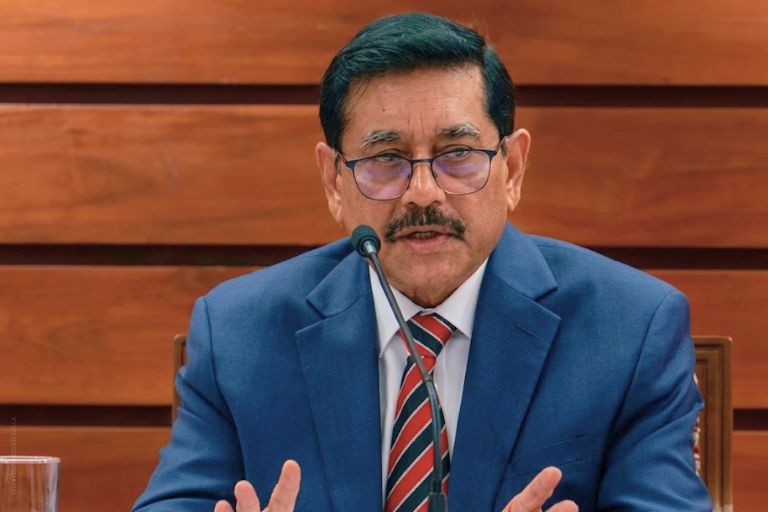
Central Bank Governor Dr. Nandalal Weerasinghe has warned that some businesses offering high returns on plantation investments may collapse when new investors stop putting in money.
He said the risk is high when a business uses money from new investors to pay earlier investors. Businesses cannot accept public deposits without approval from the Central Bank or another legal authority.
Calling the money an investment in cultivation does not change that legal requirement.
40% Returns Raise Questions
Dr. Weerasinghe said some businesses promise returns of around 40% a year. They may also promise to return the original investment at the end of the agreed period. He said a cultivation business would find it hard to make such payments from its normal business income.
“If you can pay a return of around 40% annually, after all expenses, and also return the original capital at the end, the only way to continue doing that is by taking money from new investors,” the Governor said.
He said the problem becomes clear when fewer people put new money into the business.
“When new deposits stop coming in, naturally, as we have seen in previous cases, these businesses will collapse,” he warned.
CBSL Has Not Banned Plantation Businesses
Dr. Weerasinghe stressed that the Central Bank has not banned plantation or cultivation businesses. Businesses can use their own money to run farms and other cultivation projects.
They can also share profits from those activities with investors or owners, subject to the applicable laws. The legal problem starts when a business accepts deposits from the public without the required approval.
The Central Bank has recently taken action against several entities over suspected illegal deposit-taking and finance business. It issued freezing orders against six companies and their directors under the Finance Business Act. The Colombo High Court later confirmed and extended those orders.
CBSL said it continues to investigate some of the entities. It has also found that other entities carried on finance business or accepted deposits in breach of the law.
Governor Asks Investors to Share Evidence
Dr. Weerasinghe also rejected claims that the freezing orders caused the companies to stop repaying investors. He said the orders cover funds and assets linked to the suspected illegal deposit-taking. He said keeping these funds safe could help reduce losses for investors. It could also allow the authorities to deal with the money through the legal process.
The Governor asked people who invested in these schemes to give the Central Bank information and evidence.
“If there is any hope of recovering at least part of the money, help us by providing the information,” he said.
He also said investigations found signs that some money collected from the public may have gone into other businesses and activities. These included supermarkets, newspapers, tourism projects, entertainment events and sponsorships.
The money may also have funded payments to artistes, advertising and social media promotions, he said.
Dr. Weerasinghe urged artistes, media companies, suppliers and service providers to check such businesses carefully before working with them.
CBSL Warns Public Against Unauthorised Schemes
The Governor said the Central Bank will continue to act against businesses that accept public deposits without approval. He also urged people not to put more money into such schemes.
The Central Bank is separately investigating other institutions and people following complaints about unauthorised finance business and deposit-taking. Under Sri Lankan law, only authorised institutions can accept deposits from the public.
These include institutions licensed under the Banking Act or Finance Business Act, as well as entities that receive a specific exemption under those laws.
More:
Digital Summit Asia Plans Regional Digital Platform From Sri Lanka
Central Bank of Sri Lanka (CBSL) Investment
Last modified: October 2, 2026