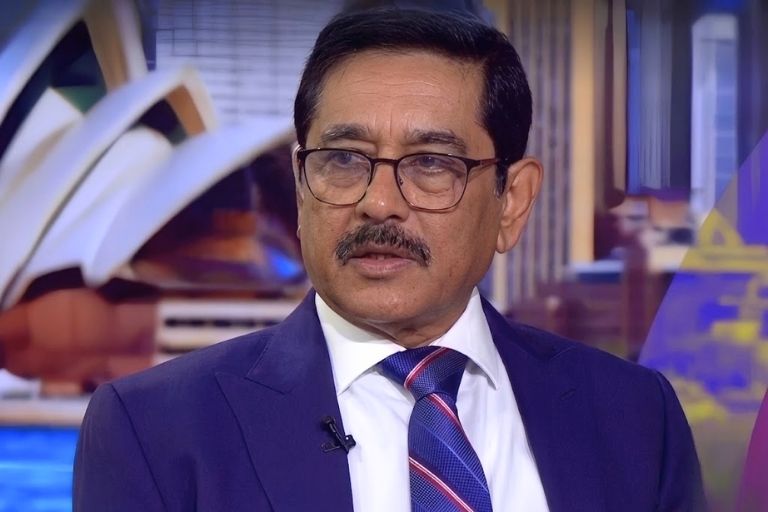
Inflationary pressure should remain manageable if global oil prices stay around US$80 a barrel through the end of this year, Central Bank Governor Nandalal Weerasinghe said.
However, he warned that a sharp rise in oil prices could create new pressure on the economy.
“If there are any surprises, then obviously we will have a challenge,” Weerasinghe said in an interview in Sydney, Australia.
The price of oil matters because higher energy costs can push up fuel, transport and import costs. That can, in turn, put more pressure on inflation.
Inflation Expected to Move Towards 5%
Weerasinghe expects inflation to move towards the Central Bank’s 5% target during the second half of this year and into next year.
He linked this outlook partly to the Central Bank’s policy measures and Government steps to control imports.
In May, the Central Bank raised its benchmark rate by one percentage point to slow credit demand as global energy prices rose.
The Bank then kept its overnight policy rate unchanged in July.
The aim is to control price increases while allowing the economy to keep growing.
Growth Could Slow
Even with higher prices and tighter monetary policy, Weerasinghe does not expect a major hit to economic growth.
He expects growth to slow to around 4% to 5% in the second half of 2026.
Still, oil prices remain an important risk.
If global oil prices rise well above US$80, the cost of fuel and imports could increase. That could make it harder to bring inflation back towards the 5% target.
The economy is also still working through the effects of the 2022 sovereign default and the ongoing IMF programme.
Weerasinghe said the four-year IMF programme is expected to end in the second half of 2027. The next review is expected around November or December this year.
The Governor made the comments in Sydney while taking part in a delegation seeking to attract investment to the Colombo Stock Exchange.
NLDB Records Rs. 300mn Net Profit in First Half of 2026
Bloomberg Interview: Nandalal Weerasinghe on Oil Prices, Inflation, Growth and Investment
Bloomberg:
You have previously said that the accommodative monetary policy period is over. What level of oil prices would give you confidence that inflation is coming under control?
Central Bank Governor Nandalal Weerasinghe:
Our baseline assumption is that if oil prices remain around US$80 a barrel through the end of this year, we should be able to manage the situation.
If there are unexpected increases in oil prices, however, we would face a challenge.
Our current projections are based on oil prices staying around that level. If they remain there, we expect inflation to come down towards our 5% target during the second half of this year and into early next year.
Bloomberg:
Is that an optimistic view, given that inflation was 6.8% in June and 7.3% in July, while the target is around 5%? Do you think monetary policy is restrictive enough at this point?
Governor Nandalal Weerasinghe:
We believe it is.
When inflation started moving towards 7%, particularly around the middle of the year, we took a proactive approach. In May, we raised the policy rate by 100 basis points, which was a sharp move and surprised the market.
We took that step for several reasons.
First, we wanted to contain inflation expectations. Second, we wanted to slow the rapid growth in private-sector credit. Third, we wanted to prevent higher oil prices from creating a lasting increase in inflation.
We therefore believe the tightening we introduced in May was sufficient.
That is also why we kept the policy rate unchanged at the most recent review. We are continuing to monitor the situation closely.
Our projections show inflation moving towards 5%, and we are already seeing some effects from the policy measures.
Private-sector credit growth has started to slow. The currency has also become more stable and has gradually recovered from the pressure seen in April and May, when oil import costs were much higher.
Government measures have also helped. For example, restrictions on some imports, including motor vehicles, and measures introduced by the Central Bank have helped manage demand.
Overall, we are now seeing a more stable situation.
Bloomberg:
What is your outlook for economic growth? Are there risks, given that the economy has been growing at around 5% for the past three years?
Governor Nandalal Weerasinghe:
Growth has remained steady at around 5%, and we expect the second quarter to show growth at a similar level.
There could be some slowdown in the second half of the year. We expect growth to be around 4% to 5% during that period.
Tighter monetary conditions and higher prices will have some impact on economic activity. However, we do not expect the effect to be severe because conditions are now becoming more stable.
Growth could therefore moderate in the second half of this year before returning towards its potential rate of around 5% from next year onwards.
Bloomberg:
You are in Australia for the Invest Sri Lanka events in Sydney and Melbourne. What is your message to investors here? Why should they invest?
Governor Nandalal Weerasinghe:
The economy is recovering well after the crisis, with growth at around 5%.
We have also been able to manage several external shocks, including the situation in the Middle East and the impact of Cyclone Ditwah.
Despite these challenges, the economy has continued to recover.
Going forward, we expect the economy to move towards a stronger growth path. For investors looking at long-term opportunities, the steady growth seen over the past three years and the expected growth in the coming years create a good environment for investment.
The currency is now more stable, while monetary and fiscal policies are also more prudent.
We are now seeing the private sector and industries playing a greater role in the recovery.
For investors looking at future growth, we believe this is a good time to consider opportunities in the country.
Bloomberg:
How is the country managing the IMF programme given the level of global uncertainty at the moment?
Governor Nandalal Weerasinghe:
The programme is progressing well.
We successfully completed the fourth and fifth reviews together in the first quarter.
The next review is expected around November or December, and we expect that review to be completed as well.
Then, during the second half of next year, we expect to complete the full four-year IMF Extended Fund Facility programme.
The IMF has also recognised the progress made so far.
The programme has helped support economic stability and create a stronger base for medium- and long-term growth.
Central Bank of Sri Lanka (CBSL) Numbers & Indexes
Last modified: August 17, 2026