
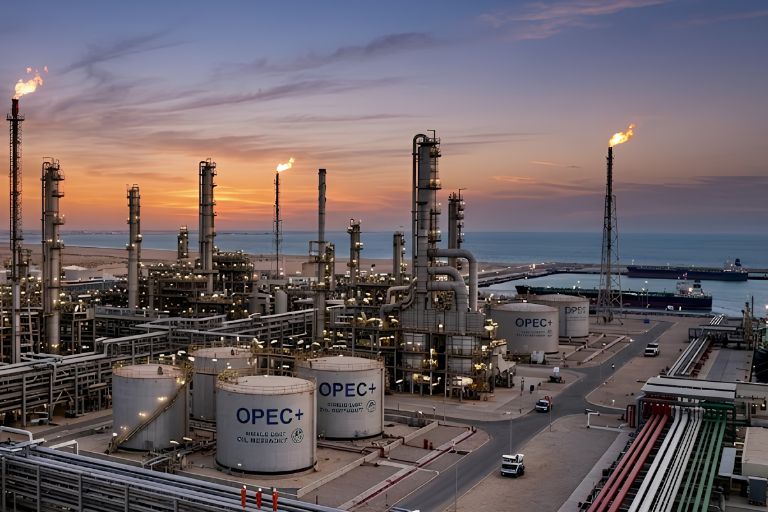
Global oil prices could face fresh downward pressure in the coming weeks. OPEC+ is preparing to increase crude oil production once again.
The producer group is expected to approve another increase in output targets from August. The decision will be discussed at its meeting on Sunday (Jul 5).
The move comes as oil exports gradually recover following the reopening of the Strait of Hormuz. The waterway remains one of the world’s busiest routes for oil shipments.
For fuel-importing countries and businesses, lower oil prices could reduce energy costs. They could also help ease inflationary pressure.
More Oil Set to Enter Global Markets
Sources familiar with the discussions said OPEC+ is expected to increase production quotas by 188,000 barrels per day from August.
The proposed increase follows similar production hikes approved for June and July.
If members approve the plan, more crude oil will enter global markets. That should improve supply at a time when export conditions are gradually returning to normal.
Seven key OPEC+ members, including Russia, have already agreed to increase production by nearly 800,000 barrels per day between April and July.
Supply Recovery Changes Market Outlook
Oil production dropped sharply during the US-Israel conflict with Iran. The conflict disrupted tanker movements through the Strait of Hormuz.
According to OPEC data, production declined from 42.77 million barrels per day in February to 33.13 million barrels per day in May.
Production started recovering in June. Export activity also improved as several Middle Eastern producers resumed shipments.
Meanwhile, weaker demand from China has reduced pressure on global supplies. Higher exports from producers outside the Middle East have also increased availability.
In addition, the International Energy Agency coordinated a record release of strategic oil stocks. That move added more supply to the market.
The ceasefire agreement has further improved market confidence. Traders now expect oil shipments to continue without major disruptions.
As a result, Brent crude traded near US$72 per barrel on Friday. That is well below the recent peak of more than US$120 per barrel.
For economies that depend on imported fuel, lower oil prices could bring welcome relief. Businesses may face lower operating costs, while consumers could eventually benefit from reduced fuel prices.
Last modified: July 5, 2026