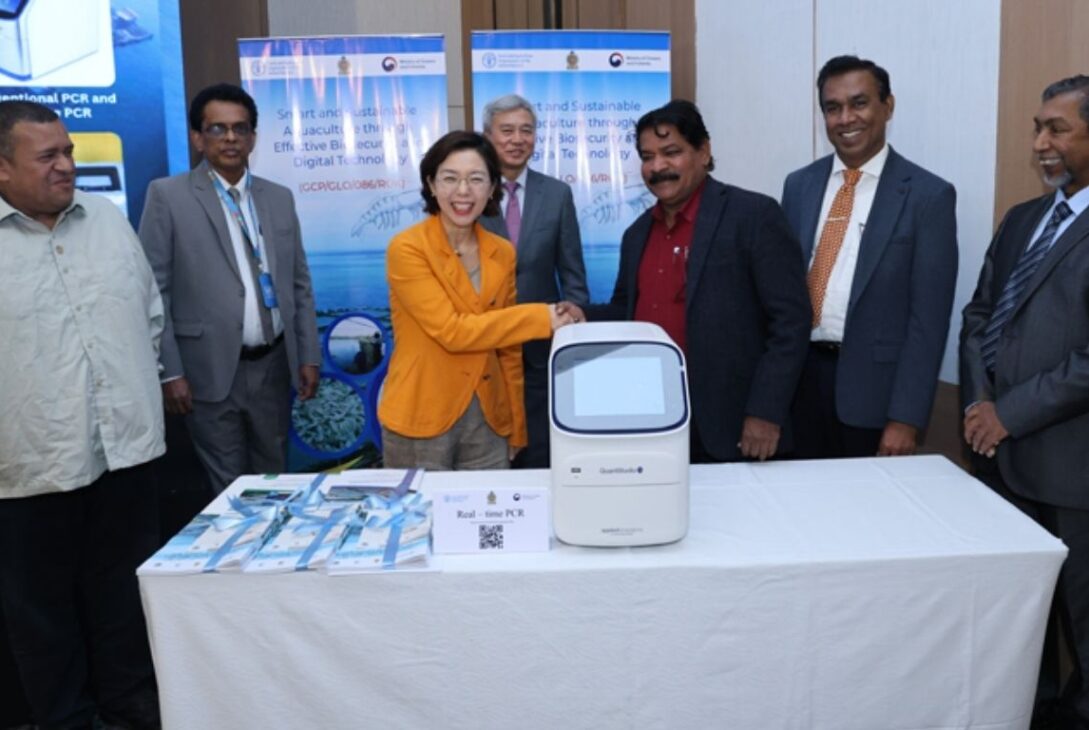
Countries’ shrimp farming industry is quietly undergoing one of its biggest transformations in years, moving from traditional farming methods toward a smarter, technology-driven future powered by digital monitoring, stronger disease control, and modern aquaculture systems.
Behind this shift is a four-year project led by the Food and Agriculture Organization of the United Nations in partnership with the Ministry of Fisheries, Aquatic and Ocean Resources, with financial support from the Republic of Korea.
For shrimp farmers, the changes are practical and immediate.
Instead of depending only on manual observations, farms can now use IoT-based digital sensors to monitor water quality in real time and receive early warnings about potential risks before diseases spread.
Digitalizing Project:
Authorities have also mapped all shrimp farms in the Northwestern Province using GIS technology, creating a more data-driven system for monitoring farms, water conditions, and disease outbreaks.
A major milestone of the project is the creation of the country’s first National Strategy on Aquatic Animal Health a framework designed to improve disease prevention and long-term sustainability in shrimp farming.
“The successful implementation of this project marks an important milestone for Sri Lanka’s aquaculture sector,” said Ramalingam Chandrasekar, Minister of Fisheries, Aquatic and Ocean Resources.
“By strengthening biosecurity systems and embracing digital technologies, we are enhancing the resilience, productivity, and sustainability of shrimp farming,” he added.
The project also trained 450 shrimp farmers and 190 government officials while providing nearly USD 128,000 worth of equipment, including laboratory tools, monitoring systems, and IT infrastructure.
“This initiative provides a strong foundation for building a resilient and sustainable shrimp industry,” said Vimlendra Sharan, FAO Representative for Sri Lanka and the Maldives.
Industry officials believe the shift toward smarter aquaculture could improve exports, food safety, farmer income, and long-term investor confidence in the sector.
Last modified: May 18, 2026