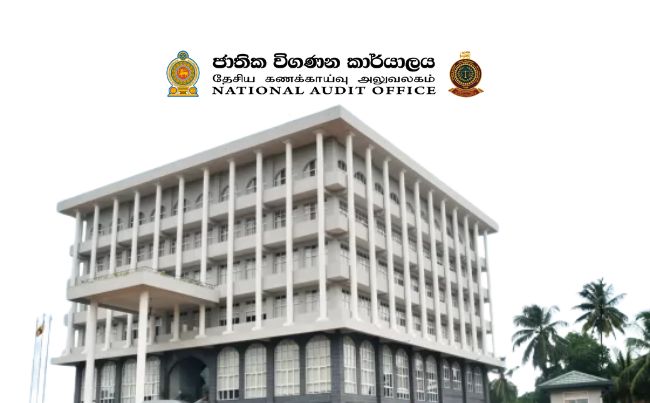
Sri Lanka will significantly expand public sector scrutiny in 2026, as the National Audit Office of Sri Lanka prepares to carry out 3,508 audits across state institutions, according to its latest Annual Work Programme.
The programme includes 3,484 Financial Audits, 12 Special Audits, 11 Performance Audits, and one Environmental Audit. These details emerged at a recent meeting of the Committee on Public Finance held at the Parliamentary complex.
The committee met under the chairmanship of Dr. Harsha de Silva, who guided discussions on fiscal oversight and accountability.
Samurdhi banks come under direct audit
From 2026, the Auditor General will also audit Samurdhi Community-Based Banks and Samurdhi Bank Societies. This marks a major expansion of financial supervision at the grassroots level.
However, the committee raised concerns about staffing capacity. In response, the Acting Auditor General confirmed that the office will require an additional 10%–15% staff. Therefore, the department has launched pilot audits through regional offices, which will run until February 2026.
Based on the findings, officials will then decide whether to recruit new staff or outsource part of the audit workload. After discussion, the committee formally backed conditional outsourcing, subject to the Auditor General’s final review.
Medicines regulation and budget oversight
At the same meeting, the committee reviewed updated rules under the National Medicines Regulatory Authority Act. It approved the regulations after calling for stronger transparency in medicine registration.
Meanwhile, the committee also examined the Final Report on the 2026 Appropriation Bill, which reflects its feedback on ministry budgets and national spending priorities.
Why this matters
This expanded audit drive will strengthen:
- Public financial control
- Budget accountability
- Regulatory transparency
- Investor and donor confidence
Ultimately, as Sri Lanka tightens fiscal discipline, the 2026 audit programme sends a strong signal of deeper governance reform and financial oversight.
IMF moves to fast-track $200m emergency funding for Sri Lanka
Last modified: December 11, 2025