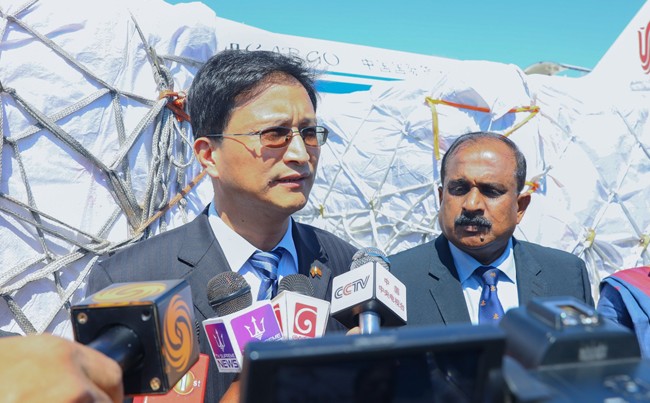
A Chinese relief aircraft carrying humanitarian aid worth approximately Rs. 400 million arrived in Sri Lanka on Tuesday, providing a major boost to post-disaster recovery efforts following Cyclone Ditwah.
The Boeing 747-400 cargo freighter landed at the Bandaranaike International Airport at 10:47 a.m. after departing from Shanghai. The shipment included 84,525 kilograms of emergency supplies, such as inflatable lifejackets, tents, blankets, and bedsheets.
These items will directly support displaced families and emergency shelters across flood- and landslide-hit districts, reducing immediate pressure on government relief stocks and welfare spending.

High-level reception highlights diplomatic and economic ties
Senior Sri Lankan officials received the aircraft at the airport, including Minister of Ports and Civil Aviation Anura Karunathilaka, Deputy Minister of Defence Aruna Jayasekara, and the Chinese Ambassador to Sri Lanka, Qi Zhenhong.
Officials said the shipment reflects strong Sri Lanka–China cooperation during times of crisis. Beyond humanitarian support, such assistance also plays a role in stabilising supply chains and reducing the fiscal burden on the State during large-scale disaster recovery.
Why this matters for the economy
Large inflows of international aid help Sri Lanka:
- Cut short-term government relief costs
- Stabilise emergency supply availability
- Support faster resettlement of affected families
- Reduce pressure on foreign exchange used for import of emergency goods
At a time when Sri Lanka continues to manage tight public finances and post-crisis recovery, foreign-funded relief also protects limited budget space for infrastructure, agriculture, and small business rebuilding.
Aid as a confidence signal
Economic analysts note that continuous international support sends a positive signal to development partners and lenders. It also strengthens Sri Lanka’s position in ongoing negotiations for reconstruction financing.
For thousands of displaced families, the arrival of this aircraft means faster access to shelter and safety. For the economy, it means critical breathing space during a fragile recovery phase.
Last modified: December 10, 2025