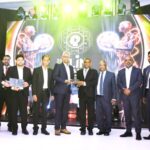
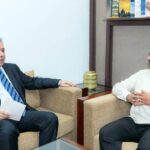
Addressing the delegation in Colombo, the Prime Minister said the country had faced a major setback but noted that public solidarity and determination were pushing the recovery process forward. She thanked NASSCOM for continuing with its scheduled visit despite the disruptions, calling it a strong signal of confidence in Sri Lanka’s stability.
The visit brought together India’s apex tech body, representing more than 3,000 companies, and SLASSCOM, which includes over 350 local member firms, to discuss digital-economy collaboration, investment opportunities, and long-term ICT development.

Dr. Amarasuriya said the government is working with the World Bank and the United Nations on short- and long-term impact assessments to guide reconstruction. Priorities include resettlement, improved disaster preparedness, enhanced flood-control systems, and rebuilding key infrastructure.
She reaffirmed that Sri Lanka’s broader economic recovery strategy remains intact, with a medium- to long-term growth target of 7%. For the technology sector, she highlighted two main priorities: export diversification and accelerated expansion of the digital economy, areas where India’s partnership remains crucial.
Responding to questions on digitalisation, the Prime Minister said the Ministry of Education is preparing to launch a National Education Management System in January, while several ministries are progressing with their own digital-transformation initiatives.
The delegation also discussed new technological support for disaster management. An Indian company specialising in drones for response, mapping, and geospatial analytics offered technical assistance to improve Sri Lanka’s early-warning and real-time monitoring systems. The Prime Minister acknowledged the need for modern tools, noting that outdated systems hindered accurate prediction of this year’s extreme rainfall.
Dr. Amarasuriya outlined ongoing reforms to strengthen Sri Lanka’s investment climate, including updated regulatory frameworks, governance improvements, and further digital-transformation measures. She reiterated the country’s ambition to reach USD 5 billion in IT and BPM export earnings by 2030, supported by education reforms and workforce-expansion plans.
She added that Sri Lanka is working closely with India to digitise public services, introduce a universal digital ID system, and deploy integrated national platforms, including the upcoming education management system.
The NASSCOM delegation’s visit aligns with long-standing collaboration between NASSCOM and SLASSCOM, ahead of the 2026 NASSCOM Technology & Leadership Forum. Senior officials, including Deputy Minister of Digital Economy Eranga Weeraratne, Dr. Hans Wijesuriya, and Indian High Commissioner Santosh Jha, were present at the meeting.
Last modified: December 6, 2025