Around a quarter of global maritime commerce passes through the Bay of Bengal, making regional maritime security and cooperation important to international trade.
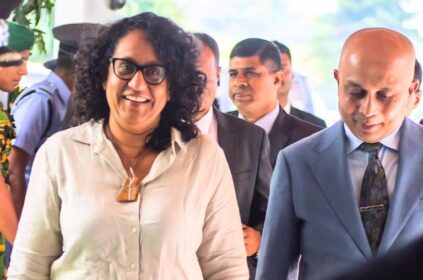
Against this background, the Sixth Bay of Bengal Maritime Dialogue brought senior officials, diplomats, maritime experts and researchers to Colombo for two days of discussions on shared maritime challenges.
The Dialogue focused on moving beyond policy recommendations and finding practical ways for countries to work together. The Pathfinder Foundation and the Centre for Humanitarian Dialogue (HD), based in Switzerland, co-hosted the event at Cinnamon Grand Colombo.
The Bay of Bengal faces several challenges that cross national borders. These include maritime security concerns, geopolitical competition, illegal fishing, pressure on shared marine resources and risks to critical infrastructure.
Environmental changes also add pressure to the region’s maritime activities. Participants discussed how stronger regional cooperation could help countries address these issues.
Protecting trade routes and critical maritime infrastructure
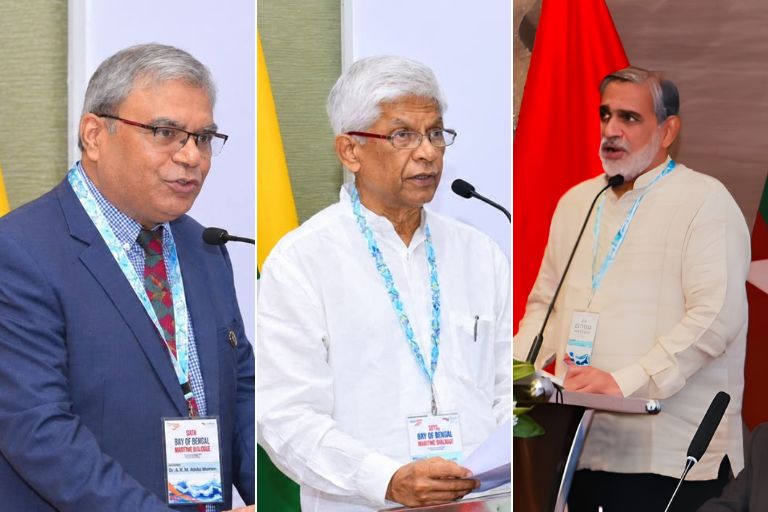
The opening session featured remarks from Pathfinder Foundation Chairman Amb. (Retd.) Bernard Goonetilleke and Centre for Humanitarian Dialogue Senior Adviser for South Asia Amb. (Retd.) Venu Rajamony.
BIMSTEC Secretary General Amb. Indra Mani Pandey delivered the plenary address. Indonesia’s Vice Minister for Foreign Affairs, Arief Havas Oegroseno, delivered a recorded keynote address.
German Ambassador to Sri Lanka and the Maldives, Ambassador Dr. Felix Neumann, also delivered a special address. Pathfinder Foundation Founder Milinda Moragoda joined the opening session.
The event also attracted high commissioners, ambassadors and representatives of diplomatic missions, alongside regional and international institutions.
The first day’s discussions examined the Bay of Bengal’s position within the wider Indo-Pacific region. Participants also considered maritime communications, crisis response and the security of critical undersea infrastructure.
One area of focus was protecting undersea cables and other infrastructure that support regional connectivity. Discussions also covered better responses to incidents at sea and ways to build trust between countries.
Participants further explored cooperation in managing shared maritime spaces and marine resources.

Illegal fishing and shared resources take focus
The second day placed greater attention on sustainable fisheries governance. A recorded message from Australia’s Special Envoy for Indian Ocean Affairs, Tim Watts MP, featured in the programme.
Discussions focused on preventing, deterring and eliminating illegal, unreported and unregulated fishing.
Participants also examined the need for better data and evidence when managing shared fish stocks. The discussions covered cross-border tensions and the effects of fisheries management on fishing communities and their livelihoods.
These issues matter to countries that depend on shared marine resources. Cooperation can help address problems that individual countries cannot manage on their own.
Dialogue seeks to turn policy into action
A major part of this year’s meeting was the session titled “From Adoption to Action”. It built on policy recommendations from the previous five Dialogues. The session focused on identifying practical steps to turn those recommendations into action.
Participants joined three breakout discussions covering maritime security, inclusion, and data and science diplomacy.
Other participants included Dr. Pandian Krishnan Pandey, Director of the Bay of Bengal Programme – Intergovernmental Organization, and Dr. Mahinda Parakrama Dissanayake, Advisor to the President on Maritime, Ports and Logistics.
The Dialogue brought together regional and international stakeholders to discuss issues affecting one of the world’s important maritime regions.
Its outcomes will be shared with regional organizations and the governments of the Bay of Bengal littoral states.
The next step will be to translate the discussions and recommendations into practical regional cooperation.
Last modified: November 6, 2026