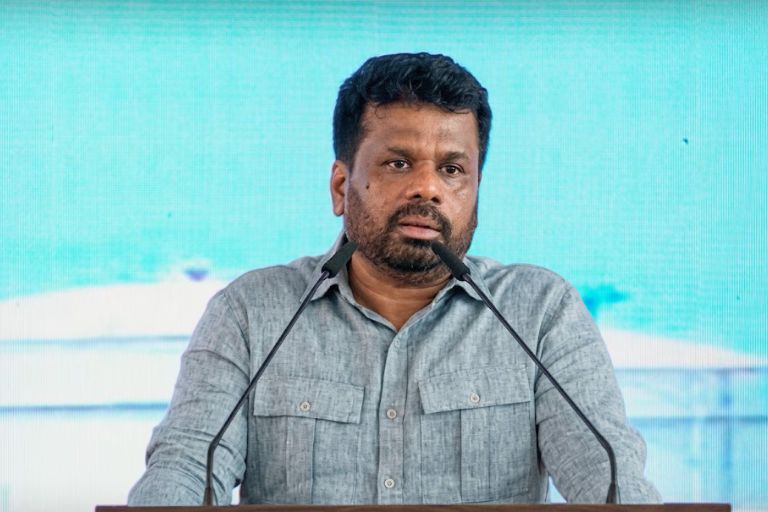
Sri Lanka currently has enough fuel in storage for only around 23 to 25 days, President Anura Kumara Dissanayake said, identifying energy security as the Government’s next major challenge.
He said, “The Government is now expanding fuel storage and pipeline infrastructure to increase the country’s storage capacity to at least 45 days. A new 104,000-cubic-metre tank system has already begun construction”.
The President made the remarks while attending the start of construction of a Jet A-1 fuel pipeline and two new oil storage tank systems for the Ceylon Petroleum Corporation (CPC) and Ceylon Petroleum Storage Terminal Limited (CPSTL).
Why the Government Wants More Fuel Storage?
Dissanayake said “the current storage level creates uncertainty over the country’s energy security. The Government plans to expand pipeline systems and reduce the time needed to unload fuel.
It also plans to build storage tanks with a capacity of around 100,000 cubic metres. The aim is to keep enough fuel for at least 45 days, or about one and a half months”.
President: Fuel Prices Are the Next Challenge
The President said “the next issue is how to provide fuel to people at the lowest possible price.
He said global fuel prices have placed pressure on the country. According to Dissanayake, refined diesel rose from US$80 to US$170 a barrel, while petrol increased from US$70 to US$136.
He said the Government chose to share the higher cost between consumers, suppliers and the Treasury.
The Treasury allocated Rs.41 billion for fuel subsidies covering October, November and December”.
Government Plans Targeted Fuel Subsidies
Dissanayake also said the Government wants to change how fuel subsidies reach the public. He said the current system gives a larger subsidy to people who use more fuel, including owners of large vehicles.
Next week, the Government plans to discuss a new digital subsidy system with the Ministry of Digital Economy. The proposed system would target sectors considered to have a genuine need for fuel support.
These include public transport, agricultural machinery, fishing vessels and lorries carrying vegetables. In a separate part of his speech, Dissanayake spoke about the financial position of the CPC and other state energy institutions.
He said CPC recorded a Rs.36 billion profit last year, while CPSTL recorded a Rs.3.5 billion profit. CPC has recorded a further Rs.28 billion profit so far this year, he said. He also said CPC’s share of the diesel market increased from around 58% to 74% last month.
According to the President, private fuel suppliers have reduced their supplies because they cannot compete with CPC’s prices
Energy Update Presidential Affairs
Last modified: October 3, 2026